

Table of Contents
Related Articles
Ezat Alnajm Strengthens UAE Crypto Compliance with CCAS
August 27, 2026

Gold Business in Dubai, UAE | Setup, Cost & Requirements
August 25, 2026

Let's Talk
Sign Up For Free Consultation
Accepting substantial digital asset payments in the UAE offers incredible commercial flexibility,
but it also demands a rigorous understanding of crypto red flags to safeguard your business from catastrophic legal exposure. As regulatory oversight sharpens across the Emirates, falling victim to a crypto scammer or unknowingly facilitating crypto money laundering can instantly result in frozen corporate assets, severe financial penalties, and criminal liability. Whether transacting in Bitcoin, USDT, or USDC, modern enterprise risk management requires proactive crypto wallet screening and robust anti-financial crime procedures to detect illicit funding paths, enforce sanctions compliance, and identify a crypto scam or high-risk transaction profile before the payment ever hits your corporate books.
Before accepting a large crypto payment, businesses need to know who is sending the funds, where they came from, and whether the wallet is linked to suspicious activity. Crypto wallet screening, blockchain transaction analysis, and appropriate customer due diligence can help identify potential money laundering, sanctions, and fraud risks before a transaction proceeds.
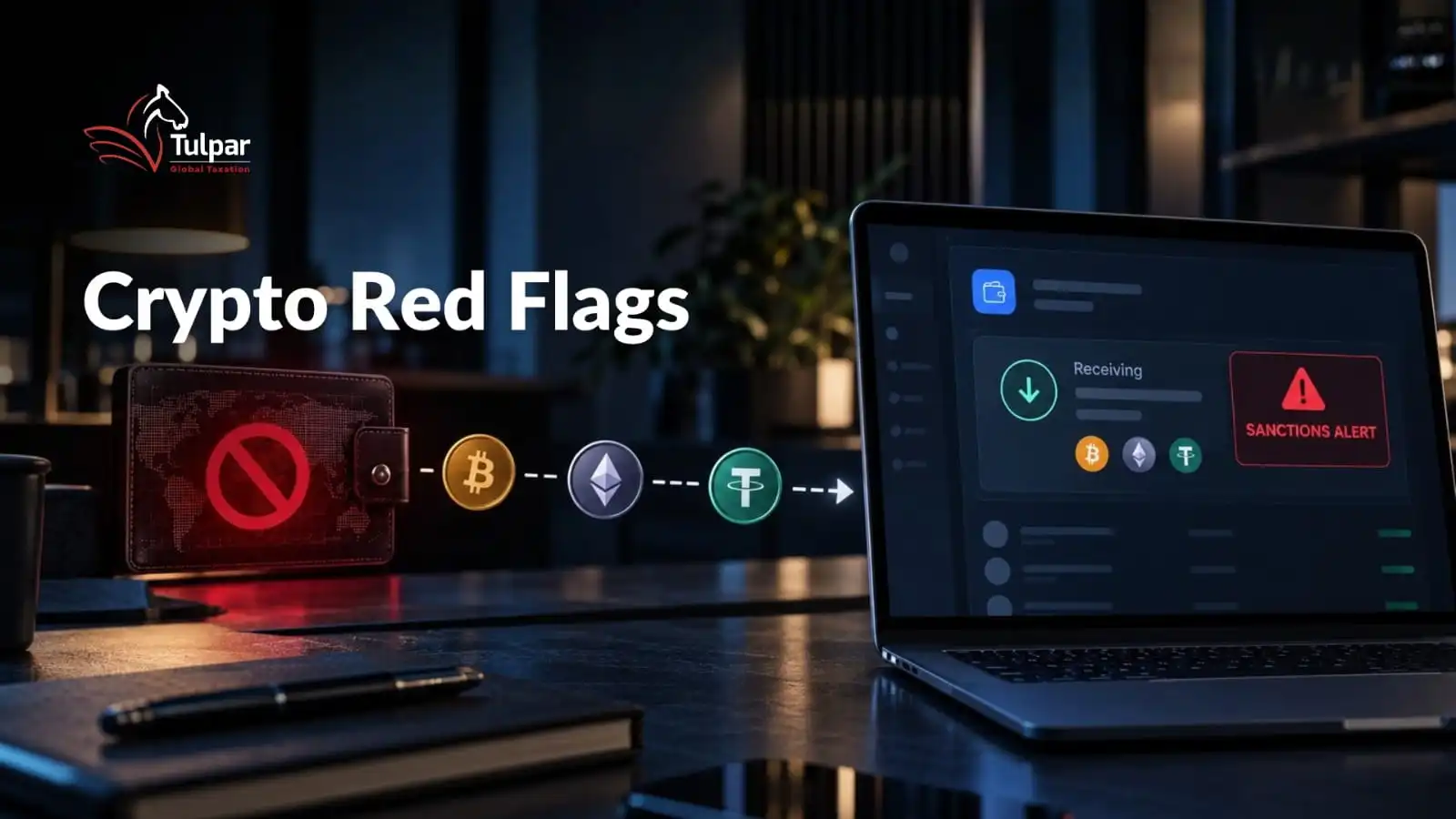
What Are Crypto Red Flags and Why Do They Matter?
Operating safely in the digital asset space requires a proactive approach to identifying crypto red flags before they compromise your operational security. These red flags are critical warning signs embedded within blockchain transaction histories, anomalous wallet behaviors, or opaque customer disclosures that indicate potential financial crime or compliance risks. While encountering an alert does not automatically verify a crypto scam, it acts as an essential trigger for your compliance team to halt the transaction and conduct enhanced due diligence before accepting any funds into your corporate ecosystem.
Common crypto red flags include:
- Transactions involving wallet addresses associated with known scams or sanctioned entities.
- Large payments that do not match the customer’s financial profile or stated business purpose.
- Funds received from multiple unrelated third parties without a clear explanation.
- Cryptocurrency moving rapidly through multiple wallets without an apparent economic reason.
- Attempts to conceal transaction origins through mixers or other obfuscation services.
- Inconsistent information about the customer, beneficial owner, or source of funds.
- Top Crypto Scam Warning Signs for Businesses
Top Crypto Scammer Warning Signs for Businesses
Understanding specific warning signs helps businesses identify when a cryptocurrency payment requires closer examination.
1. Unexplained Sources of Cryptocurrency Funds
A client offers a large cryptocurrency payment but cannot explain where the funds originated or provide reliable documents supporting their source of wealth.
2. Suspicious Cryptocurrency Wallet Connections
A customer’s crypto wallet shows connections to addresses associated with fraud, stolen funds, sanctioned entities, or suspicious activities, requiring further investigation before accepting payment.
3. Unusual Cryptocurrency Transaction Patterns
Frequent transfers between multiple wallets, unusually large payments, or rapid fund movements without clear business purposes may indicate potential fraud or money laundering activities.
4. Attempts to Conceal Cryptocurrency Transaction Origins
Customers use crypto mixers, privacy tools, or complicated transaction routes that make tracing funds difficult, raising concerns about possible attempts to hide suspicious activities.
5. Third-Party Cryptocurrency Payments Without Clear Explanation
A client arranges cryptocurrency payments through unrelated individuals or businesses without explaining their involvement, creating uncertainty about fund ownership, payment legitimacy, and transaction origins.
How Can Crypto Transactions Be Linked to Money Laundering?
Money laundering involves concealing the criminal origin of proceeds so that they appear legitimate. Cryptocurrency can be misused for this purpose because digital assets can move between wallets and jurisdictions without the same physical movement associated with cash.
Common risk patterns include:
- Layering: Moving cryptocurrency through multiple wallets or services to make the transaction trail more difficult to understand.
- Third-party transfers: Using other individuals or businesses to receive or transfer funds without a clear commercial reason.
- Conversion through high-risk services: Moving assets through services associated with suspicious activity or weak controls.
- Inconsistent transaction values: Using cryptocurrency to make payments that do not match the customer’s declared income, business activity, or financial profile.
- Unclear source of wealth: Claiming that funds originate from crypto investments without providing evidence that reasonably supports the amount being spent.
Consider a property buyer who claims that cryptocurrency investment profits will fund a property purchase. The available records, however, account for only part of the amount being transferred.
This mismatch does not establish money laundering, but it is a reason to investigate the source of funds more carefully.
The UAE Financial Intelligence Unit has documented real estate-related cases involving virtual assets, undisclosed sources of funds, third-party arrangements, and property purchases inconsistent with customers’ profiles.
The Role of Sanctions Screening in Crypto Transactions
A cryptocurrency wallet may have indirect connections to sanctioned individuals or entities, even when the wallet itself does not appear on a sanctions list. Funds can move through multiple wallets, exchanges, or other services, making these connections difficult to identify without appropriate screening.
For businesses accepting Bitcoin, USDT, USDC, or other digital assets, sanctions screening helps assess whether a proposed transaction may involve designated parties or restricted activity.
Key checks may include:
- Sanctions list screening: Checking relevant wallet addresses and customer details against applicable sanctions lists.
- Indirect exposure analysis: Tracing transactions to identify potential connections with designated wallets or entities.
- Ownership and control checks: Assessing relevant ownership or control links where reliable information is available.
- Alert investigation: Determining whether a potential match is credible or a false positive.
- Compliance documentation: Recording the findings and actions taken in response to identified risks.
For example, a business preparing to receive USDC may discover that the sending wallet has interacted with an address associated with a sanctioned entity. This does not automatically establish wrongdoing by the client, but the connection may require further investigation.
If a credible sanctions concern is identified, the business should follow the applicable legal requirements, which may include restricting the transaction, freezing assets where legally required, and reporting the matter to the relevant authority.
What Does AML Compliance Require for Crypto Payments?
AML compliance helps businesses identify and manage financial crime risks when accepting cryptocurrency payments. Depending on their activities and applicable UAE regulations, businesses may need to:
Verify customer identities: Understand who is making the payment and the purpose of the transaction.
Screen crypto wallets: Check for potential links to suspicious activity or sanctioned entities.
Monitor transactions: Investigate unusual patterns that may indicate money laundering.
Verify source of funds: Request supporting documents when the origin of cryptocurrency is unclear.
Maintain records and report concerns: Document compliance checks and report suspicious transactions to the relevant authorities when legally required.
These measures help businesses assess crypto payments systematically and respond appropriately to potential risks. Wallet screening and blockchain analysis should support, rather than replace, customer due diligence and other applicable AML procedures.
Why Verify Crypto Wallets Before Receiving Large Payments?
Before accepting a substantial cryptocurrency payment, businesses should assess potential fraud, money laundering, and source-of-funds risks. Cryptocurrency fraud and scams can expose UAE businesses and investors to significant financial and compliance risks, making wallet verification, transaction monitoring, and proper due diligence essential risk mitigation measures. Wallet verification helps examine transaction history and identify suspicious patterns.
For example, an international trading company preparing to receive AED 2 million in cryptocurrency from a new customer may discover unusual wallet transfers or inconsistencies in the customer’s explanation. Investigating these concerns and requesting supporting documents before accepting payment helps the company make a more informed decision.
How Tulpar Taxation Can Protect Against High-Risk Wallets and Scam Warnings
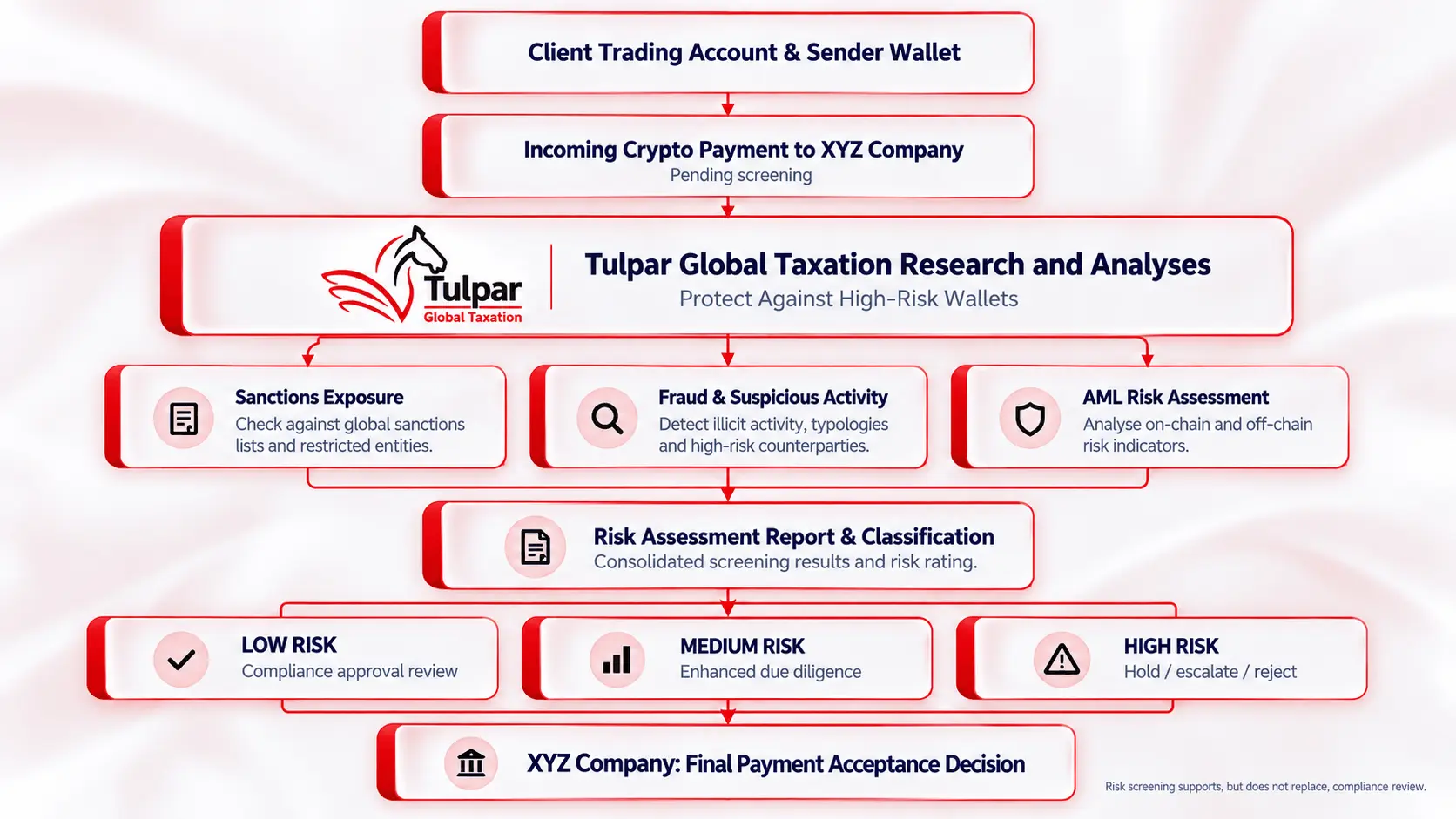
Before accepting a substantial cryptocurrency payment, businesses need to understand the potential financial crime risks associated with the customer, wallet, and transaction.
Tulpar Global Taxation can position its advisory support around helping businesses assess crypto-related risks, understand screening findings, and identify areas requiring further investigation.
Depending on the agreed scope of service, support may include:
- Client wallet risk assessment: Reviewing available wallet information to identify potential warning signs.
- Wallet ID verification: Checking the client’s wallet address and blockchain network to identify the wallet being used for payment.
- Transaction risk review: Examining available blockchain transaction history for suspicious patterns and relevant exposure.
- Sanctions and AML risk identification: Helping businesses understand potential alerts and determine where additional investigation is warranted.
- Source-of-funds review: Identifying documentation gaps and inconsistencies requiring clarification.
- Compliance support: Helping businesses understand relevant due diligence considerations and document their risk assessment.
The scope of wallet screening should be clearly defined in advance, including the tools, data sources, deliverables, and responsibilities involved. With his Cryptoasset Anti-Financial Crime Specialist (CCAS) certification, Ezat Alnajm brings specialized knowledge of crypto-related financial crime risks and AML compliance, supporting informed risk assessment and stronger cryptocurrency compliance practices in the UAE.
Planning to receive a large cryptocurrency payment for a property or business transaction? Book a consultation with us to discuss your crypto wallet screening service or you can email us at info@tulpartax.com or call +971 54 444 5124.
FAQs:
What are the main red flags in cryptocurrency transactions?
Common warning signs include unexplained sources of funds, suspicious wallet connections, unusual transaction patterns, sanctions exposure, and payments involving unrelated third parties without a clear explanation.
Can crypto wallet screening detect money laundering?
Wallet screening can identify transaction patterns and blockchain connections associated with potential money laundering. However, screening alone cannot prove that money laundering has occurred.
When should a business conduct crypto wallet screening?
Businesses should consider screening a customer’s wallet before accepting large cryptocurrency payments, particularly from new clients or when transaction details, fund origins, or payment patterns raise concerns. Early screening helps identify potential risks and determine whether further due diligence is needed.
What risks can crypto wallet screening identify?
Crypto wallet screening helps identify potential links to sanctions, money laundering, mixers, darknet markets, scams, fraud, stolen funds, and other financing by analysing wallet transaction histories and blockchain connections to flag suspicious activity requiring further investigation.
What should a business do if a crypto wallet raises a red flag?
The business should investigate the potential risk before accepting the payment. Tulpar Global Taxation can assist with crypto wallet history checks, transaction risk reviews, and identifying potential AML, sanctions, and source-of-funds concerns.
