
What are Different Business Licensing Options in UAE - 2026
Table of Contents

Let's Talk
Sign Up For Free Consultation
Different Business Licensing Options in UAE
The regulatory landscape of the United Arab Emirates (UAE) has undergone a profound transformation. Under strategic initiatives like the Dubai Economic Agenda (D33) and the federal Operation 300bn, the country has solidified its position as a structured, digitally integrated, and globally respected business hub. However, launching or expanding a business here is no longer just about obtaining a trade license; it requires a highly strategic approach to corporate structuring, jurisdiction selection, and tax compliance.

With the full implementation of the 9% Federal Corporate Tax UAE and the rollout of advanced frameworks like the Dubai Unified License (DUL), choosing the right business licensing options in UAE carries immediate operational and fiscal implications. This definitive UAE licensing guide explores the primary regulatory pathways, jurisdictional nuances, and structural requirements tailored for international investors, corporate executives, and finance professionals navigating the market.
What are the Main Types of Business Licenses in UAE?
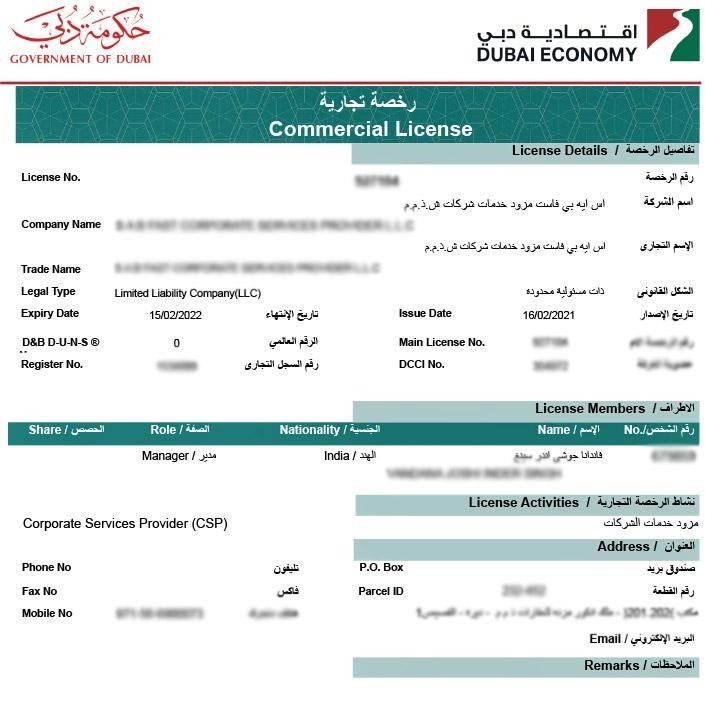
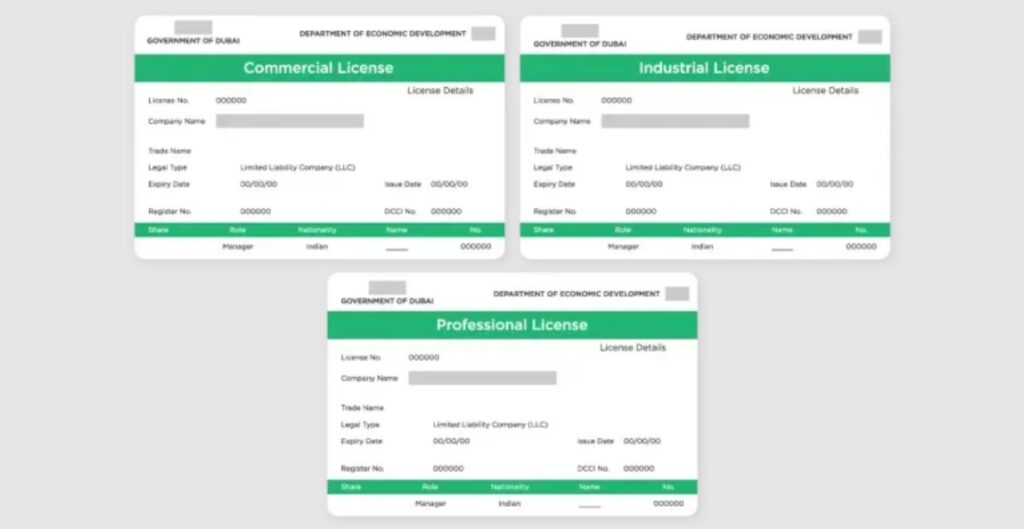
When executing a UAE company registration, your legal structure and operational boundaries are directly anchored to your chosen business activity. The relevant Economic Departments and Free Zone authorities categorize operations into distinct UAE business license types. Selecting the correct variant ensures seamless business compliance and prevents administrative or banking friction.
Commercial License UAE
The commercial license UAE remains the most sought-after category for enterprises focused on the buying, selling, importing, or exporting of physical goods. It governs activities such as wholesale, retail, real estate brokerage, logistics, and distribution. In 2026, modern digital infrastructure allows companies to group up to 10 related commercial activities under a single UAE trade license. Furthermore, a generalized variant the General Trading License is available for businesses requiring maximum operational flexibility across non-restricted asset classes.
Professional License UAE
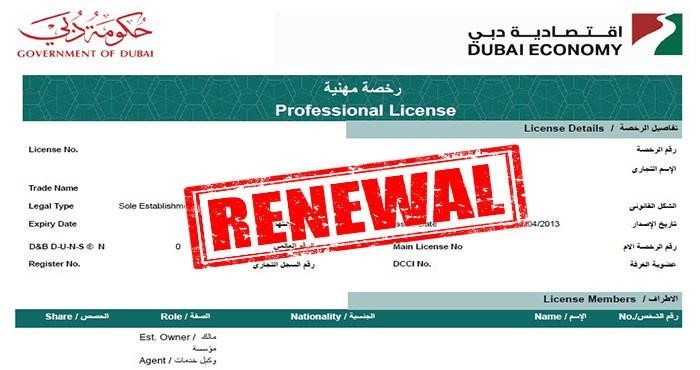
Designed for service providers, skilled professionals, artisans, and consultancies, the professional license UAE covers sectors such as management consulting, digital marketing, legal services, and software development. Historically, professional licenses on the mainland operated under a Sole Establishment or civil company framework requiring a local service agent. Today, investors routinely establish professional entities with 100% foreign ownership while retaining limited liability protection. However, specific regulated activities require attested educational certificates and external regulatory clearances prior to initial approval.
Industrial License UAE
For enterprises engaged in manufacturing, assembly, raw material processing, or industrial production, securing an industrial license UAE is mandatory. This framework heavily supports the nation’s supply chain localization strategies. Significant regulatory shifts have dramatically lowered entry barriers. For example, the Sharjah Economic Development Department (SEDD) offers a fast-track, low-cost instant industrial license package, while the national Industrial Resilience Fund provides strategic financing to boost advanced automation and smart manufacturing.
Jurisdictional Analysis: Mainland vs. Free Zone vs. Offshore
The most critical operational decision during a business setup in UAE is selecting the correct legal jurisdiction. The choice between a Mainland business license UAE, a Free Zone business license UAE, or an Offshore company UAE dictates your target market reach, banking profile, and tax exposure.
Mainland Business License UAE (Onshore)
- Market Access: Unrestricted. A mainland entity can engage in direct B2B, B2C, and government procurement contracts across all emirates without regional barriers.
- Ownership Rules: Since the landmark legislative reforms, the majority of commercial and professional activities permit 100% foreign ownership, completely eliminating the historical requirement for a local Emirati partner or sponsor in standard sectors.
- Physical Infrastructure: A physical office space authenticated by a certified lease contract—such as an Ejari in Dubai—is mandatory for full license issuance.
Free Zone Business License UAE (Onshore)
- Geographic Boundaries: A Free Zone company license restricts direct trading within the domestic UAE mainland market unless facilitated via a local distributor, agent, or under specific Dubai Unified License arrangements.
- Corporate Incentives: Free zones offer streamlined company incorporation, robust logistics infrastructure, 100% capital repatriation, and flexible physical requirements ranging from hot-desks (flexi-desk setups) to dedicated multi-story facilities.
- Tax Optimization: Qualifying Free Zone Persons can leverage a 0% rate on “Qualifying Income” under the modern UAE corporate tax framework, provided they maintain adequate substance and strict regulatory compliance.
Offshore Company UAE (Non-Resident)
- Trading Restrictions: Direct commercial trade within the domestic UAE market is strictly prohibited.
- Infrastructure & Residency: Offshore setups do not require a physical office workspace inside the UAE and do not grant eligibility for an investor visa or UAE residency.
- Tax and Regulatory Status: While generally outside the active operational scope of UAE Corporate Tax on domestic income, offshore entities remain subject to strict Ultimate Beneficial Ownership (UBO) reporting and international compliance standards.
Mainland vs Free Zone License: Which Should You Choose?
Deciding which business license is best in UAE depends entirely on your corporate goals, target audience, and operational framework. The choice between Mainland and Free Zone determines how your business scales, processes logistics, and handles corporate tax obligations.
Direct Local Trade vs. Regional Isolation
If your business plan requires physical retail stores, mainland distribution, direct contracts with UAE government entities, or unrestricted B2B trading across all seven Emirates, a Mainland business license UAE is essential. Free Zone entities, by contrast, are legally isolated from the local mainland market unless they trade through a mainland distributor, a local agent, or set up a mainland branch office.
Tax Optimization & Substance Requirements
While both jurisdictions operate under the federal corporate tax framework, Free Zones offer unique tax incentives. Under the UAE business licensing options 2026 updates, entities inside designated Free Zones can leverage a 0% Corporate Tax rate on Qualifying Income. However, to claim this, the Free Zone entity must maintain strict “adequate substance” within the zone, meaning operations, key decisions, and operational expenses must physically occur inside that specific jurisdiction. Mainland companies are subject to the standard 9% tax on net profits exceeding AED 375,000.
Office Space and Scale Flexibility
Mainland licenses scale directly with physical real estate; your employee visa quota is linked directly to the square footage of your office or warehouse space (Ejari). Free Zones are highly attractive for tech startups, digital nomads, and professional consultants because they offer virtual spaces, co-working solutions, and flexi-desk packages that allow businesses to operate with minimal physical infrastructure overheads.
Can Foreigners Own a Business in UAE?
The definitive answer is yes. The UAE has fundamentally dismantled historical protectionist barriers to position itself as one of the most liberal foreign direct investment (FDI) regimes globally.
100% Full Foreign Ownership
Following sweeping updates to the UAE Commercial Companies Law, foreign investors can now achieve 100% ownership of their entities on both the Mainland and within Free Zones. The historical mandate requiring a local UAE national partner to hold a 51% equity stake in mainland commercial companies has been completely abolished for thousands of industrial, commercial, and professional activities.
Retaining Full Corporate Control
Foreign expatriates and international corporations hold absolute operational, financial, and structural control over their UAE entities. There is no requirement to share profits, surrender voting rights, or appoint local proxies for standard activities.
Exceptions and Strategic Restrictions
Full foreign ownership is unrestricted across standard industries like IT, retail, e-commerce, manufacturing, and consulting. However, a limited number of “strategic impact” sectors remain subject to local equity requirements or strict federal oversight. These primarily include:
- Defense and military activities
- Banking, insurance, and money exchange operations
- Upstream oil and gas exploration
- State-regulated telecommunications
Comparative Matrix: Jurisdiction Selection
Structural Element | Mainland Company | Free Zone Company | Offshore Company |
Licensing Authority | Economic Departments (e.g., DET) | Specific Free Zone Authorities | RAK ICC / JAFZA |
Domestic Market Access | Unrestricted direct B2B and B2C | Restricted to Zone/International | None (Holding purpose only) |
Foreign Ownership | Up to 100% in approved sectors | 100% standard | 100% standard |
Office Requirement | Mandatory physical space (Ejari) | Flexi-desk / Physical Unit | Registered Agent Address |
UAE Residency Visas | Uncapped (Based on office sq. ft.) | Capped allocations per package | None |
Standard Corporate Tax | 9% on taxable income > AED 375,000 | 0% on Qualifying Income / Else 9% | Typically exempt if non-sourced |
Specialized and Niche Licensing Options
Beyond standard categories, corporate authorities provide specialized vehicles tailored to emerging economic models, technology sectors, and digital solo entrepreneurs.
Tourism License
Administered in close alignment with regional tourism boards, this license is mandatory for businesses operating travel agencies, outbound/inbound tour operations, hotel management, and holiday home rentals. It requires strict adherence to security protocols, consumer protection guidelines, and insurance requirements.
E-commerce License
Driven by the exponential growth of digital retail across the GCC, an E-commerce license permits online trading, dropshipping, and digital storefront operations. Many affordable free zones offer competitive packages for digital traders, enabling startups to integrate seamlessly with regional payment gateways and fulfillment providers.
Freelance Permit
Catering to the gig economy, digital nomads, and independent consultants, the Freelance permit allows individual professionals in media, technology, education, and design to operate legally without an incorporated company structure. This path provides a streamlined route to a residency visa and corporate banking access for sole operators.
What Documents Are Required for a UAE Business License?
The documentation process has been significantly optimized through digital governance portals like Invest in Dubai and TAMM in Abu Dhabi. However, maintaining exact, well-structured documentation remains vital to secure banking and regulatory clearance.
Essential Founder Documentation
For individual investors, entrepreneurs, and ultimate beneficial owners, the mandatory initial filings include:
- High-resolution color copies of the passports of all proposed shareholders and directors.
- A copy of the UAE Visa and Emirates ID (if currently a resident), or a clear copy of the passport entry stamp showing the unique Unified Identification (UID) number for international investors.
- Passport-sized photographs against a white background, compliant with immigration portals.
- The official Trade Name Registration certificate issued by the relevant Economic Department or Free Zone registrar.
Corporate Shareholder Documentation (For Subsidiaries or Branches)
If the new entity is being established by an existing foreign or local parent company, additional attested corporate records are required:
- A certified copy of the parent company’s Certificate of Incorporation, Trade License, or Memorandum of Association (MOA).
- A formal Board Resolution explicitly authorizing the UAE company formation, detailing the capital allocation, and appointing the local Legal Representative/Manager.
- A formal Power of Attorney (POA) granting authority to the setup consultant or manager to execute incorporation steps.
- Note for Foreign Entities: All documents originating outside the UAE must be fully legalized, apostilled, and translated into Arabic by certified translators before submission.
Property and Structural Documentation
To finalize the licensing phase, authorities require proof of structural validity:
- The executed and notarized Memorandum of Association (MOA) or Articles of Association (AOA) governing the new entity.
- The official Initial Approval certificate from the licensing registry.
- A valid lease contract for the office or warehouse space, registered and authenticated via Ejari (for Mainland setups) or the equivalent Free Zone lease agreement.
Strategic Step-by-Step UAE Company Formation Process
Securing a business license in UAE follows a digital-first, structured workflow managed by corporate registrars and economic portals.
- Step 1: Define Business Activities — Identify and cross-reference your proposed business operations against the official unified activity codes maintained by the Economic Department or selected Free Zone.
- Step 2: Trade Name Registration — Submit a list of preferred company names for trade name registration. The selected name must strictly adhere to UAE naming conventions.
- Step 3: Secure Initial Approval — The initial approval from the licensing authority validates that the UAE government has no objection to the establishment of your enterprise.
- Step 4: Finalize the Corporate Charter (MOA) — Draft and execute the Memorandum of Association (MOA) for mainland entities or the standard Articles of Association for Free Zone establishments.
- Step 5: Establish a Physical Presence — Secure an office lease or a dedicated workspace. For mainland setups, your lease must be verified through the municipal portal to generate an authenticated tenancy contract (Ejari).
- Step 6: License Issuance and Fee Clearance — Submit the consolidated documentation—including the executed MOA, initial approval certificate, trade name reservation, and verified lease contract—to the governing registry.
How Long Does Business Licensing Take in UAE?
The timeline required to complete your UAE business registration varies depending on the jurisdiction chosen, the complexity of your corporate structure, and whether your activities require third-party government regulatory sign-offs.
Mainland Instant Licenses
For basic commercial and professional setups that do not require immediate physical office spaces, Economic Departments offer “Instant License” pathways. Utilizing digital signatures and automated registry matching, these licenses can be generated online within 1 to 2 working days. Investors are granted a one-year grace period to secure an office and submit a formal lease contract.
Standard Onshore Formations
A standard setup involving the drafting of a custom Memorandum of Association, physical property inspection, and trade name registration typically takes between 4 to 7 working days for Mainland setups, and 3 to 10 working days for standard Free Zones.
Complex Corporate & Regulated Timelines
If the corporate structure involves international corporate shareholders (requiring multi-jurisdictional legal translation and document attestation), or if the business activity falls under regulated sectors such as the Dubai Health A thority (DHA) for clinics, RERA for real estate, or the UAE Central Bank for financial applications—the timeline can extend from 2 to 4 weeks to account for deep background checks and specialized regulatory reviews.
How Much Does a UAE Business License Cost?
Understanding the comprehensive UAE business license cost structure is vital to accurately budget your corporate launch capital. Setup expenses are modular and scale based on your jurisdiction, employee visa headcount, and real estate footprint.
Breakdown of Cost Components
- Government Registration & Licensing Fees: Paid directly to the Economic Department or Free Zone authority. These fees range from AED 10,000 to AED 25,000 per annum depending on the specific activities selected.
- Trade Name & Initial Approval Fees: Minor administrative processing fees typically totaling between AED 1,000 and AED 2,500.
- Market Fees & Municipal Taxes: Mainland entities pay a recurring municipal fee calculated as a percentage (typically 2.5% to 5%) of their annual office lease value.
- Corporate Hub / Office Infrastructure Costs: Virtual desks or Free Zone flexi-desk allocations add AED 4,000 to AED 12,000 annually, while physical mainland commercial offices vary significantly based on location and size.
- Immigration and Visa Allocations: Establishing a company visa channel (Establishment Card) costs roughly AED 2,000 to AED 3,500, with individual employment or residency visas costing between AED 3,000 and AED 7,000 per person.
Strategic Total Budget Approximations
- Low-Cost Virtual/Freelance Setup: Northern Emirate Free Zones offer highly competitive starter packages including a single visa allocation for approximately AED 12,000 to AED 18,000 total.
- Standard Mainland LLC Setup: A mid-tier mainland consulting or commercial trading business utilizing a small physical office space typically requires an initial capital outlay of AED 25,000 to AED 45,000, excluding active office rent.
Crucial Post-Licensing and Financial Compliance Requirements
Securing your trade certificate is simply the baseline of your corporate journey. To operate legally, avoid severe financial penalties, and protect your legal standing, several critical post-licensing milestones must be addressed immediately.
Corporate Tax Registration
All newly incorporated entities must register for Corporate Tax with the Federal Tax Authority (FTA) within the mandated statutory windows (typically within 3 months of license issuance). While the standard federal corporate tax rate is 9% on taxable net profits exceeding AED 375,000, eligible small businesses with gross revenues below AED 3 million may qualify for Small Business Relief, reducing their active tax liability to 0%.
Navigating corporate tax rules, qualifying free zone substance tests, and complex transfer pricing rules requires expert guidance. Working with top-tier consultancies like Tulpar Global Taxation ensures your corporate structure is fully optimized and compliant from day one.
For advanced advisory, it is highly recommended to engage a certified professional such as Ezat Alnajm, an FTA certified tax agent and certified transfer pricing expert in Dubai, UAE. Having an expert of Ezat Alnajm’s caliber ensures that cross-border transactions, transfer pricing documentation, and corporate tax returns withstand rigorous regulatory audits.
Value Added Tax (VAT) Registration
Enterprises must closely monitor their trailing or projected revenues to determine their VAT registration obligations under UAE tax law:
- Mandatory Threshold: AED 375,000 in taxable turnover.
- Voluntary Threshold: AED 187,500 in taxable turnover or expenses.
Furthermore, businesses must align their internal accounting systems with the newly deployed digital e-invoicing frameworks introduced across the UAE compliance ecosystem to maintain transparent reporting.
Ultimate Beneficial Ownership (UBO) Declarations
In strict alignment with federal Anti-Money Laundering (AML) and Counter-Terrorism Financing regulations, all companies must maintain and submit an active UBO register to their respective licensing authority within 15 days of setup or any ownership structural changes. This file lists the ultimate individuals who hold a direct or indirect ownership stake or voting rights of 25% or more in the entity.
Sponsoring Corporate Visas and Operational Infrastructure
Immediately following company incorporation, the management must apply for a Company Establishment Card through the Ministry of Human Resources and Emiratisation (MoHRE) and relevant immigration boards (GDRFA/ICP). This document establishes your corporate immigration account, allowing you to secure an investor visa, process UAE residency files for partners, and build out your team via the Wage Protection System (WPS).
Simultaneously, the active license allows you to establish a dedicated corporate business bank account with traditional legacy banks or modern digital-first corporate banking platforms to isolate operational capital from personal funds.
Strategic Synthesis: Capitalizing on UAE Licensing Opportunities
The choice of your business licensing options in UAE forms the architectural foundation of your entire commercial enterprise. Whether your business goals demand the unhindered local market penetration of a mainland LLC, the tax-optimized framework of a specialized Free Zone, or the international asset holding capacity of an offshore entity, navigating this terrain requires precise execution.
A single structural misstep during the trade name reservation, activity selection, or corporate tax registration phase can lead to costly delays, operational limitations, or banking rejections. Partnering with a specialized business setup consultant ensures your company is designed for maximum scalability, full regulatory compliance, and total structural optimization.
Initiate Your Corporate Journey in the UAE
Ready to position your enterprise for long-term growth in the world’s most dynamic commercial hub? Contact our specialist business formation and tax structuring teams today to receive a customized jurisdiction blueprint, navigate your application effortlessly, and accelerate your time-to-market.
Disclaimer: The information presented in this guide is current as of 2026. Given the dynamic nature of UAE corporate and tax legislation, businesses should consult certified professionals such as the tax advisors at Tulpar Global Taxation or an FTA certified tax agent like Ezat Alnajm to ensure alignment with the latest updates from the Ministry of Economy (MOEC) and the Federal Tax Authority.
FAQs:
The UAE offers three main types of business licenses: Commercial, Professional, and Industrial. Each license type is issued based on the nature of business activities. Choosing the correct license is essential for legal compliance and smooth operations.
A Commercial License is required for businesses involved in trading activities such as import, export, retail, or wholesale. It covers activities like general trading, e-commerce, and distribution. This license is commonly used by trading companies across the UAE.
A Professional License is issued to service-based businesses such as consultants, auditors, IT professionals, designers, and legal advisors. It focuses on professional skills and expertise rather than trading. Many professionals prefer this license for flexibility and ownership benefits.
An Industrial License is required for manufacturing, processing, or industrial production activities. Businesses involved in assembling, packaging, or industrial operations must obtain this license. Additional approvals from authorities may be required depending on the activity.
Mainland licenses allow businesses to operate anywhere in the UAE and trade directly with the local market. Free Zone licenses are ideal for international trade, online businesses, and cost-effective setups, but may have restrictions on Mainland trading. The choice depends on your target market.
Yes, the UAE allows 100% foreign ownership for most business activities, both in Mainland and Free Zones. This has made the UAE highly attractive to global investors and entrepreneurs. Ownership rules may vary for certain regulated sectors.
Tax obligations depend on business turnover and activities, not just the license type. Businesses may need VAT registration and must comply with Corporate Tax regulations, even if they qualify for 0% tax. Proper tax planning is crucial at the licensing stage.
Choosing the right license depends on your activity, target market, budget, and long-term goals. Incorrect licensing can lead to penalties or operational restrictions. Professional advice helps avoid costly mistakes.
The process can take anywhere from a few days to a few weeks, depending on the license type and authority. Free Zones often offer faster setups, while Mainland licenses may require additional approvals. Proper documentation speeds up the process.
Business setup and tax professionals provide end-to-end support, from license selection to compliance planning. Working with Tulpar Global Taxation ensures your business license aligns with UAE regulations, tax requirements, and growth objectives.
