
How Ezat Alnajm is Strengthening UAE Crypto Compliance with CCAS
Table of Contents

Let's Talk
Sign Up For Free Consultation
The future of digital assets depends on more than innovation. As crypto businesses continue to expand, strong financial crime controls and specialised compliance knowledge are becoming increasingly important for building trust and supporting responsible growth.
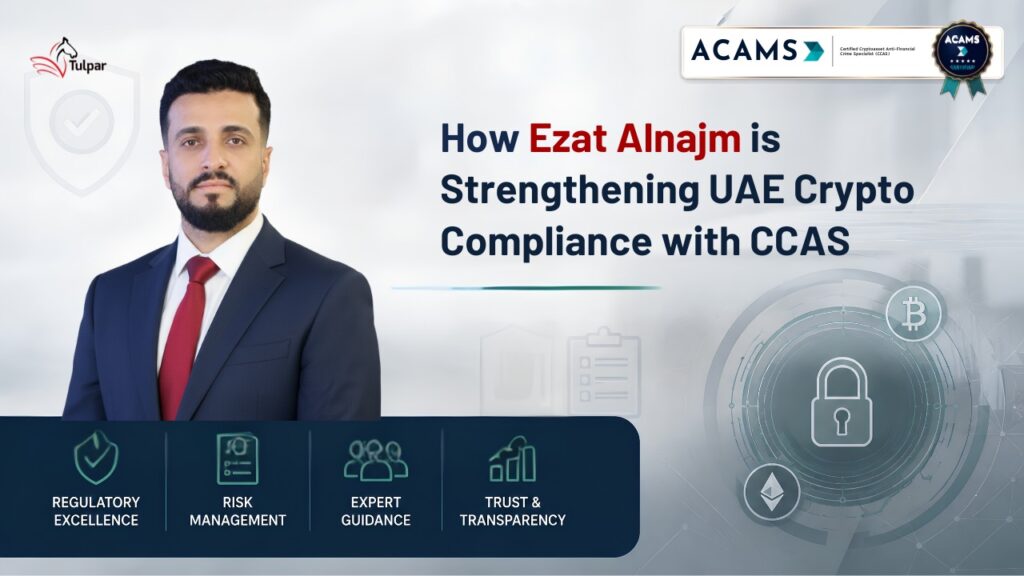
Tulpar Global Taxation is pleased to announce that CEO Ezat Alnajm has been certified as a Crypto Financial Crime Specialist, marking an important milestone in the firm’s continued development of expertise across taxation, financial compliance and the emerging digital asset sector.
The development comes at a time when businesses are paying greater attention to anti money laundering, customer due diligence, transaction monitoring, risk assessment and regulatory responsibilities within the digital asset sector.
Crypto compliance is no longer limited to understanding traditional financial controls. Digital asset activities can involve blockchain networks, digital wallets, tokenised assets, decentralised platforms and cross border transactions. Each area can create specific compliance considerations.
Specialist knowledge in cryptoasset financial crime can therefore provide a stronger foundation for understanding the risks associated with this evolving financial environment
From Tax Expertise to Crypto Financial Crime Knowledge
Taxation and financial crime compliance are separate areas of professional practice, but digital asset businesses can encounter questions across both fields.
A company operating with cryptoassets may need to consider taxation, accounting, business structuring and regulatory requirements while also addressing AML and financial crime risks.
This creates a need for a broader understanding of the financial environment surrounding digital assets.
Ezat Alnajm’s journey from tax expert to crypto anti-financial crime leader reflects this expansion of professional expertise. His certification connects an established background in taxation and financial compliance with specialist knowledge of cryptoasset anti-financial crime considerations.
The combination can provide a wider perspective when considering the financial responsibilities of businesses operating in emerging sectors.
Digital assets are increasingly becoming part of mainstream business activity. As a result, professional knowledge needs to extend beyond traditional financial services and include the specific characteristics of blockchain based financial activity.
Challenges Facing Crypto Businesses in the UAE
As digital asset activities become more complex, crypto businesses face growing compliance challenges. Risks such as money laundering, fraud, difficult-to-trace transactions, cross-border transfers and misuse of digital wallets can create significant concerns. Businesses must also keep pace with evolving regulations and maintain effective customer due diligence, transaction monitoring and risk management systems. These challenges highlight the need for stronger compliance frameworks and specialised professionals who understand the financial crime risks associated with cryptoassets and blockchain-based activities.
The Development of Crypto Compliance in the UAE
The growth of digital assets has changed the way businesses think about financial services, investment and the movement of value. Blockchain technology has introduced new methods for recording and transferring transactions, while cryptoassets have created new business models across the global economy.
The UAE has developed a significant digital asset ecosystem, attracting businesses involved in blockchain technology and virtual asset activities. With this development comes greater attention to governance, transparency and financial crime prevention.
Businesses operating in the sector need to understand the regulatory framework applicable to specific activities. The requirements can vary depending on the nature of the service, the type of digital asset involved, the customers served and the jurisdiction in which operations take place.
A strong understanding of financial crime risk is therefore an important part of building responsible digital asset operations.
The development of specialist qualifications such as CCAS reflects the growing need for professionals with knowledge of the particular risks associated with cryptoassets and blockchain based activities.
Understanding the CCAS Credential
CCAS stands for Certified Cryptoasset Anti-Financial Crime Specialist. The credential is offered by ACAMS and focuses specifically on financial crime risks associated with crypto assets and digital assets. By earning this credential, Ezat Alnajm has added focused knowledge of cryptoassets, blockchain, AML foundations and risk management to his professional development.
The certification covers areas connected with cryptoassets and blockchain, anti money laundering foundations and risk management programmes for cryptoasset and blockchain activities.
This specialist focus distinguishes cryptoasset financial crime knowledge from general AML knowledge.
Traditional financial services have established systems for identifying customers, monitoring transactions and managing financial crime risks. Digital assets introduce additional considerations because transactions can involve blockchain addresses, multiple networks, digital wallets, crypto exchanges and different forms of tokenised value.
Understanding these characteristics is important when assessing risk.
The CCAS credential provides a structured foundation for examining these issues and understanding how financial crime prevention principles can be applied within the cryptoasset environment.
Why Crypto AML Matters
Anti money laundering remains a central component of financial crime prevention.
Cryptoasset businesses can face risks involving customer identity, transaction activity, geographical exposure, sanctions and the movement of assets between different platforms.
Blockchain transactions can provide a permanent record of activity, but transaction visibility does not remove the need for proper customer and transaction risk assessment.
A business still needs to understand the nature of the activity taking place and whether transactions are consistent with the expected customer profile.
Appropriate AML controls can include customer identification, customer due diligence, enhanced due diligence where applicable, sanctions screening, transaction monitoring, risk classification, record keeping and procedures for escalating potentially suspicious activity. Ezat Alnajm’s new certification expands his crypto AML expertise, reflecting the importance of understanding how established AML principles interact with the characteristics of digital assets.
How Cryptoasset Financial Crime Risks Can Arise
Financial crime risks in digital assets can arise through several areas of activity.
Transactions may involve multiple blockchain addresses, different digital asset platforms or jurisdictions. Businesses may also encounter customers or counterparties whose activities require additional scrutiny.
Cryptoassets can also be used within complex transaction structures. Understanding the source and movement of value can therefore become an important part of financial crime risk assessment.
A risk based approach allows businesses to focus resources on areas presenting greater exposure.
The first stage involves understanding the business model. This includes identifying customers, services, transaction types, jurisdictions and counterparties.
The next stage involves assessing potential risks and determining which controls are appropriate.
Controls should be proportionate to the actual risk faced by the business. A digital asset exchange, blockchain technology provider and token related business may have very different compliance requirements.
Specialist knowledge can support a more informed assessment of these differences.
The Role of Risk Assessment in Crypto Compliance
Risk assessment is one of the foundations of an effective compliance framework.
A business cannot establish appropriate controls without first understanding the risks connected with its activities.
For a digital asset business, risk assessment may consider customer types, products and services, transaction volumes, geographical exposure, delivery channels and the characteristics of the digital assets involved.
The assessment should not remain static.
A business may introduce new products, expand into additional jurisdictions, change customer segments or increase transaction volumes. Each development can affect the overall risk profile.
Regular reviews can therefore help ensure that compliance controls remain relevant.
The CCAS qualification adds specialist knowledge of these considerations and supports a stronger understanding of the financial crime risks that can arise within cryptoasset activities
How CCAS Knowledge Can Benefit Crypto Businesses
Professional certifications can play an important role in developing specialist knowledge.
The CCAS credential provides a dedicated focus on crypto-asset financial crime, helping professionals develop a deeper understanding of the risks associated with blockchain and digital assets.
Ezat Alnajm’s achievement of Certified Cryptoasset Anti-Financial Crime Status represents an important addition to professional expertise within Tulpar Global Taxation.
The qualification does not replace regulatory licences, legal requirements or the responsibilities of individual businesses. Instead, it contributes to the professional knowledge required to understand cryptoasset financial crime considerations.
This distinction is important.
A professional certification demonstrates knowledge, while regulatory authorisation determines whether a business can conduct specific regulated activities.
Digital asset businesses must continue to assess the regulatory requirements applicable to their particular operations.
What This Means for Tulpar Global Taxation
The addition of specialist cryptoasset financial crime knowledge supports Tulpar’s broader approach to financial compliance.
Businesses involved in digital assets can face interconnected questions involving taxation, accounting, financial crime and regulatory responsibilities.
A broader understanding of these areas can support more informed discussions around the financial environment in which digital asset businesses operate.
The achievement also reflects the importance of continuous professional development within the firm.
As new industries develop, professional advisers need to keep building knowledge that corresponds with changing business models and regulatory expectations.
The digital economy is creating new challenges for businesses across the UAE. Specialist knowledge can help provide a stronger foundation for understanding those challenges.
A Professional Milestone in Crypto Financial Crime
Ezat Alnajm’s CCAS certification adds specialised crypto financial crime knowledge to Tulpar Global Taxation’s existing compliance expertise. This knowledge can benefit businesses involved in crypto exchanges, virtual asset services, blockchain platforms, digital wallets, tokenised assets and other digital asset activities. It can support a better understanding of AML requirements, customer due diligence, transaction monitoring and financial crime risks, helping businesses approach crypto compliance with greater awareness as the UAE digital asset sector continues to develop.
The certification represents a commitment to developing knowledge in this specialist area as the UAE digital asset market continues to mature. Businesses seeking guidance on cryptoasset taxation, financial compliance or related regulatory considerations can contact Tulpar Global Taxation for professional assistance. Just email us at info@tulpartax.com or call +971 54 444 5124 for professional guidance and personalized assistance.
FAQs:
The certification focuses on areas including cryptoassets and blockchain, AML foundations for cryptoassets and blockchain and risk management programmes connected with cryptoasset activities.
Specialist knowledge can help professionals better understand cryptoasset financial crime risks, AML considerations, risk assessment and the controls that may be relevant to different digital asset business models.
We can help businesses understand financial compliance considerations related to their cryptoasset activities, including AML considerations, risk assessment, customer due diligence and financial crime risks. The appropriate support depends on the business model and applicable UAE regulatory requirements.
Yes. We provide guidance on cryptoasset taxation and related tax considerations, helping businesses understand how their digital asset activities may interact with UAE tax obligations.
Our specialist knowledge can help businesses better understand potential financial crime risks associated with their activities, including customer profiles, transaction activity, jurisdictions, counterparties and the nature of the digital assets involved.
