
How Tensions in the Strait of Hormuz Are Shaping Global Shipping Costs and Routes
Table of Contents

Let's Talk
Sign Up For Free Consultation
The Silent Shock Behind Global Shipping Costs
The Strait of Hormuz is one of the most strategically important maritime chokepoints in the world. Even without physical disruption, rising geopolitical tensions in this narrow waterway can instantly trigger global freight rate volatility, insurance spikes, and customs restructuring across international supply chains.
The Strait of Hormuz is a critical maritime passage connecting the Persian Gulf to global oceans, through which a large share of global oil and LNG shipments pass, making it highly sensitive to geopolitical tensions that directly affect shipping costs and global trade routes.
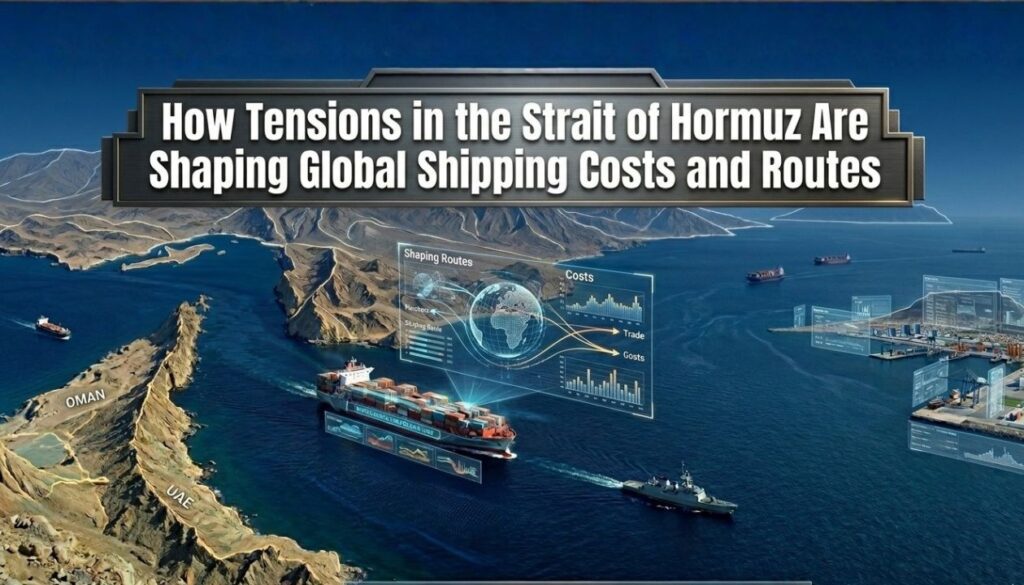
Why the Strait of Hormuz Matters to Global Trade
The Strait of Hormuz is one of the most critical maritime chokepoints in the world, connecting the Persian Gulf with the Arabian Sea. Nearly a significant share of global oil and liquefied natural gas (LNG) shipments pass through this narrow corridor daily, making it a strategic lifeline for global energy and trade flows.
When tensions rise in this region, the impact is immediate and far-reaching. Shipping costs increase, insurance premiums surge, and global supply chains are forced to adapt quickly. For businesses in the UAE and beyond, even small disruptions can translate into higher landed costs, customs complexities, and unpredictable delivery timelines.
Even a perceived risk in this corridor causes:
- Immediate rise in shipping insurance premiums
- Recalculation of global freight routes
- Hidden customs and duty changes due to rerouting
- Supply chain delays of 7–14 days or more
For UAE businesses, this is not theoretical, it directly affects import cost structure, landed pricing, and VAT/customs exposure.
This article explores how geopolitical tensions in the Strait of Hormuz reshape global shipping routes, freight pricing structures, and customs-driven hidden costs, with a specific focus on the concept of alternative routes and their true economic impact on supply chains.
Strategic Importance of the Strait of Hormuz in Global Shipping
The Strait of Hormuz is not just a regional passage, it is a global trade artery.
Key Functions of the Strait:
- Connects oil-rich Gulf countries (UAE, Saudi Arabia, Iraq, Kuwait, Iran, Qatar) to global markets
- Handles a major share of global crude oil exports
- Supports LNG shipments to Asia and Europe
- Serves container vessels moving goods between East and West
Why it is highly sensitive:
- Narrow passage increases vulnerability to disruption
- High geopolitical activity and military presence
- Dependence on uninterrupted energy exports
- Limited viable alternative maritime chokepoints
When risk perception rises, shipping companies immediately adjust pricing models even without physical disruptions.
How Shipping Routes Are Structured Around the Strait of Hormuz
Global shipping routes are designed for efficiency, fuel optimization, and customs predictability. The Strait of Hormuz sits at a critical junction of:
- Asia–Europe trade corridor
- GCC export routes
- East Africa and South Asia supply lanes
Normal Route Flow (Simplified):
- Cargo originates in Asia, Europe, or the Americas
- Ships pass through the Arabian Sea
- Enter the Strait of Hormuz
- Distribute goods across GCC ports or pass through to global markets
When tension rises:
- Shipping lines reroute vessels
- Transit times increase by 20% – 40%
- Fuel consumption rises sharply
- Customs declarations shift due to changed port entry points
Even a minor deviation creates a cascading cost effect across the supply chain. Route changes do not only affect logistics, they also trigger customs reclassification and landed cost restructuring across jurisdictions.
Real Impact of Hormuz Tensions on Global Shipping Costs

Shipping costs are not fixed, they are dynamic and highly sensitive to geopolitical risk.
Freight Rate Volatility
Freight rates increase due to:
- Higher risk premiums
- Reduced vessel availability
- Longer transit distances
- Disruption in scheduling efficiency
Marine Insurance Costs
Insurance is one of the most affected components:
- War risk premiums increase during tension periods
- Coverage conditions become stricter
- Insurers may exclude certain transit zones
Fuel and Operational Costs
- Longer alternative routes increase bunker fuel consumption
- Crew time and port handling costs rise
- Port handling delays
- Additional compliance and monitoring costs are added
Hidden Cost Layer (Often Overlooked)
- Demurrage and detention charges due to delays
- Inventory holding costs increases
- Contract penalties from late delivery
- Customs reclassification fees when ports change
These hidden costs often exceed the visible freight increase.
Alternative Shipping Routes and Their Real Trade-Offs
When the Strait of Hormuz is considered high-risk, shipping companies explore alternative pathways.
Common Alternatives:
- Route via Cape of Good Hope (South Africa)
- Partial Red Sea diversion (when feasible)
- Regional transshipment through Indian Ocean hubs
Key Trade-Offs Impact:
- Longer transit time (up to 10–14 extra days)
- Increased fuel consumption (15% – 35%)
- Higher operational exposure risk
- Complex customs clearance due to multiple port entries
Alternative routes are not just logistical decisions, they are financial restructuring events for global trade flows.
Supply Chains and Customs: The Hidden Costs Behind Alternative Routes
This is where most businesses underestimate impact. When shipping routes change, customs classification, duty exposure, and import valuation rules can change simultaneously.
Why Customs Costs Increase
When goods pass through different jurisdictions or transshipment hubs:
- Goods may be temporarily reclassified
- New documentation requirements apply
- Country-of-origin validation becomes more complex
- Duty structures may shift depending on port of entry
Hidden Customs Cost Mechanism (Step-by-Step)
- Route Diversion Decision
- Shipping line selects safer or longer route
- Transshipment Change
- Cargo is offloaded at alternate hub (e.g., Singapore, Oman, Djibouti)
- Documentation Update
- Bills of lading and manifests are updated
- Customs Reassessment
- New port authorities review cargo classification
- Duty Variation
- Import duties may change depending on entry point
- Final Delivery Cost Inflation
- All incremental costs accumulate into landed cost
Who is most affected?
- Import-heavy SMEs
- Manufacturing supply chains
- E-commerce businesses
- Energy and petrochemical traders
When it works best
Alternative routing is only efficient when:
- Risk of disruption is high enough to justify cost increase
- Supply chain urgency is low
- Cargo value offsets extended logistics cost
Step-by-Step Breakdown: How Route Disruptions Increase Final Costs
To understand real-world impact, consider the structured breakdown:
Step 1: Risk Escalation in Strait of Hormuz
- Shipping insurers raise premiums
- Carriers reduce transit frequency
Step 2: Route Diversion Decision
- Ships are rerouted to longer paths
- Port rotation schedules change
Step 3: Increased Transit Time
- Average delivery delay increases by 20–40%
Step 4: Operational Cost Expansion
- Fuel consumption rises
- Crew wages and vessel time increase
Step 5: Customs & Documentation Shifts
- Entry points change
- Duties and VAT implications may vary
Step 6: Final Cost Impact
- Landed cost increases by 8%–25% depending on cargo type
Comparison: Direct Route vs Alternative Route Impact
Factor | Strait of Hormuz Direct Route | Alternative Route (Cape / Diversion) |
Transit Time | Faster, predictable | Longer by 7–14 days |
Freight Cost | Lower base rate | Higher due to rerouting |
Insurance Premium | Stable under normal conditions | Increased war-risk premium |
Customs Complexity | Simplified single-entry system | Multi-port documentation |
Fuel Consumption | Optimized route efficiency | Higher fuel burn |
Supply Chain Risk | Lower | Moderate to high |
Inventory Cost | Lower holding cost | Higher due to delays |
Risk Management Strategies for Global Businesses
Businesses can reduce exposure to Hormuz-related disruptions using structured strategies.
Supply Chain Diversification
- Use multiple shipping lanes
- Avoid dependency on single corridor
Contract Structuring
- Include force majeure and rerouting clauses
- Fix freight rates where possible
Customs Optimization
- Pre-classify goods for multiple jurisdictions
- Maintain updated HS codes
Strategic Warehousing
- Use UAE free zones for buffer stock
- Position inventory near GCC entry points
Digital Tracking Systems
- Real-time vessel monitoring
- Predictive delay analytics
UAE Business Impact and Taxation Perspective
The UAE plays a central role in global logistics due to its strategic location near the Strait of Hormuz.
Businesses operating in Dubai, Sharjah, and Ajman often face direct exposure to shipping fluctuations but also benefit from advanced logistics infrastructure and free zone flexibility.
In this context, firms like Tulpar Global Taxation with branches in Dubai, Sharjah, and Ajman support businesses in managing tax compliance, customs structuring, and cross-border financial planning under shifting trade conditions.
Additionally, professionals such as Ezat Alnajm, FTA Certified Tax Agents in the UAE, contribute to ensuring that multinational businesses maintain compliant pricing structures even when supply chain routes and cost bases fluctuate due to geopolitical pressures.
Why this matters in UAE context:
- Import/export-driven economy
- High dependency on maritime logistics
- Strong customs and VAT regulatory framework
- Increasing need for structured tax advisory under volatile shipping costs
Key Takeaways
- The Strait of Hormuz is a critical global shipping chokepoint influencing trade stability
- Even minor geopolitical tension leads to significant freight and insurance cost increases
- Alternative shipping routes introduce hidden customs and compliance costs
- Supply chain disruptions affect landed cost far beyond freight charges
- UAE businesses must integrate tax, logistics, and customs strategy to remain competitive
FAQs:
The Strait of Hormuz is one of the most important energy routes in the world. Even small geopolitical tensions here immediately affect global markets. When risk rises, shipping insurance increases, freight rates go up, and companies adjust pricing across supply chains. This happens even without actual disruption, perception alone drives cost changes.
When ships avoid the Strait, they take longer and less efficient routes. This increases fuel consumption, adds transit days, and disrupts delivery schedules. It also affects port planning and warehouse operations. In many cases, businesses also face changes in customs documentation depending on the new entry port, which adds another layer of complexity.
Most of the time, yes. While they reduce exposure to geopolitical risk, they come with higher operational costs. Longer distances mean more fuel, higher vessel time, and increased handling charges. The safer route often becomes the more expensive one overall once all hidden costs are included.
Customs duties can change because goods may enter through different jurisdictions or ports. This can impact classification rules, documentation requirements, and valuation methods. Even small changes in entry points can affect total landed cost. This is where structured planning becomes critical, and firms like Tulpar Global Taxation (UAE) help businesses manage customs compliance and optimize tax exposure under changing trade routes.
Industries that rely heavily on imports and exports feel it first. This includes oil and gas, manufacturing, automotive, retail, and e-commerce. These sectors depend on predictable shipping timelines, so even small disruptions can create inventory shortages, pricing pressure, and supply chain delays.
To some extent, yes. Companies use freight indices, risk monitoring tools, and geopolitical tracking to forecast trends. However, sudden escalations are still difficult to predict accurately. This makes shipping costs inherently volatile, especially in sensitive regions like the Strait of Hormuz.
On average, rerouted shipments can take an additional 7 to 14 days. This depends on the route chosen, congestion at alternate ports, and vessel availability. These delays don’t just affect delivery, they also increase storage costs and can impact contract deadlines.
Businesses reduce risk by diversifying shipping routes, maintaining buffer stock in free zones, and using flexible contracts. Strong customs planning is also essential to avoid unexpected costs. In the UAE, Tulpar Global Taxation supports companies with customs strategy, VAT planning, and landed cost optimization to reduce financial shocks from supply chain disruptions.
Not always. Risk levels change depending on geopolitical conditions. However, because of its global importance, insurers and shipping companies always treat it as a sensitive zone. This means pricing and planning already include a baseline risk factor even during stable periods.
UAE businesses are directly connected to global shipping routes, so they feel cost fluctuations quickly. At the same time, they benefit from strong logistics infrastructure and free zones. The key challenge is managing changing landed costs, customs exposure, and VAT impact, areas where Tulpar Global Taxation (Dubai, Sharjah, Ajman) helps businesses maintain compliance and financial stability during volatility.
Let's Talk
Sign Up For Free Consultation
Share :
Approved by Federal Tax Authority (FTA) Agent
Mon - Fri: 8:00 am - 5:00 pm

Tulpar Global Taxation stands as a premier company in the United Arab Emirates, specializing in taxation, accounting, and auditing services.
info@tulpartax.com
official email
+971 52 508 8249
WhatsApp Support



Insights & Updates
Subscribe for the latest UAE Tax regulations and deadlines.
Useful Links
Corporate Tax & VAT Services
Transfer Pricing Services
Auditing Services
Accounting & Bookkeeping
Business Setup & Bank Account Opening
AML Compliance Services
Feasibility Study Report
Recents Posts


Head Office
Dubai Headquarters
Aspect Tower – Office No. 2206 – Zone B Bay Avenue
Business Bay – Dubai, UAE
Regional Presence
Ajman Free Zone Branch
Executive Office – 317, Building A1
Ajman Free Zone, UAE
Sharjah Saif Zone Branch
Building Y – Office No. 32
Sharjah International Airport – Saif Zone
Copyright © 2026 TulparGlobal Taxation. All Rights Reserved. By TGT
