

UAE SRN Delay 2026: Reasons, Solutions & How to Cancel a Stuck SRN
UAE SRN delays in 2026 usually occur due to verification bottlenecks, data mismatches, or system congestion, but most can be resolved quickly with the right corrective steps. This guide explains the key reasons for a stuck SRN, practical solutions to speed up approval, and how to properly cancel an SRN through UAE tax platforms.
Table of Contents
Related Articles



Let's Talk
Sign Up For Free Consultation
UAE SRN Challenges in 2026
Tax compliance in the UAE has entered a new phase in 2026. With Corporate Tax enforcement in full swing, enhanced documentation standards, and frequent updates from the Federal Tax Authority (FTA), the SRN (Service Request Number) process has become a critical area of focus for all taxable persons and businesses. SRN delays have become increasingly common due to a combination of regulatory tightening, portal upgrades, and surging application volumes. Businesses that understand these challenges early can better prepare, avoid compliance disruption, and maintain smooth operational continuity.
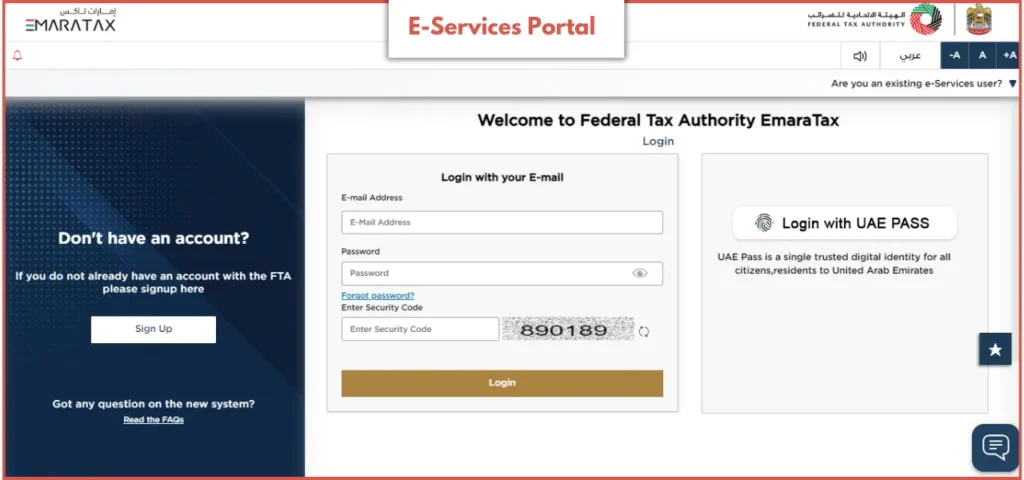
Importance of a UAE Tax Registration Number (SRN/TRN)
Today, the SRN is more than just a reference number, it is the foundation of tax registration, validation, and communication with the FTA. Every TRN (Tax Registration Number) application, Corporate Tax registration, VAT update, or Excise filing starts with an SRN. As the UAE strengthens compliance standards, businesses are expected to submit complete, accurate, and perfectly aligned documentation. Because even minor inconsistencies can result in delays, many companies now actively engage firms like Tulpar Global Taxation in Dubai, Sharjah, and Ajman, as well as experts such as Ezat Alnajm, FTA Certified Tax Agent in Dubai, to avoid costly mistakes.
Anticipating Delays: Why 2026 Demands Proactive Planning
2026 is expected to be the busiest year for the FTA in terms of Corporate Tax registrations, TRN verifications, and compliance submissions. New entities entering the UAE market, Free Zone transitions, and complex multinational structures create additional processing pressure. Businesses that do not proactively prepare may experience delays not due to errors, but due to sheer system overload. Preparing documents ahead of time, keeping data consistent across UAE Pass, trade license, and portal profiles, and seeking expert support help businesses stay ahead of these bottlenecks.
What This Guide Covers: Reasons, Solutions, and Instant Cancellation Strategies
This guide gives businesses a competitive advantage by covering:
- The primary causes of UAE SRN delays expected in 2026
- How to detect and confirm a stuck SRN
- The fastest ways to resolve or escalate pending SRNs
- How to cancel a stuck SRN instantly and reapply correctly
- Proven strategies to prevent future SRN delays
Together, these insights equip UAE business owners, accounting teams, corporate strategists, and tax advisors to navigate compliance challenges with confidence.
Understanding the Federal Tax Authority (FTA) and its Role
The Federal Tax Authority plays a central role in reviewing SRNs, approving TRNs, validating business activities, and ensuring that every registered entity meets UAE tax obligations. As part of its digital transformation, the FTA has increased automation, AI-driven verification, and cross-government validation. While these improvements drive long-term efficiency, they may introduce periodic slowdowns, resulting in stuck or delayed SRNs. Maintaining alignment with FTA protocols and understanding procedural expectations significantly reduces complications.
Understanding the SRN and its Significance for Taxable Persons
The SRN is a pillar of the UAE compliance system, allowing businesses to track, modify, and respond to FTA requests. As Corporate Tax enforcement intensifies, the accuracy of SRN submissions has become essential for preventing financial and operational delays.
What is an SRN (Tax Registration Number) in UAE?
An SRN is the initial tracking identifier generated by the FTA portal for every tax-related request. It is used for:
- Corporate Tax registration
- VAT registration or deregistration
- TRN amendments
- Excise registration
- Clarification requests
- Appeal submissions
Without an SRN, the FTA cannot process or track your request, making it the starting point for nearly every compliance action.
Who Needs an SRN? Identifying Taxable Persons and Entities
All individuals and entities engaging in taxable activities in the UAE require an SRN, including:
- Mainland companies
- Free Zone entities
- International companies with UAE taxable presence
- Freelancers and sole proprietors
- E-commerce sellers
- Branches of foreign companies
- Family-owned businesses entering Corporate Tax
An SRN ensures that your entity is properly identified, reviewed, and processed by the FTA.
The Link Between SRN, Corporate Tax (UAE CT), and Other Obligations (e.g., Excise Tax)
Corporate Tax has elevated the importance of SRNs. Any delays in SRNs affect:
- TRN issuance
- Access to Corporate Tax accounts
- Filing deadlines
- Audit preparation
- Tax group formation
This link makes SRNs a central element of any compliance-driven strategy.
The FTA's Mandate in Regulating Taxation and Registration
The FTA is responsible for ensuring tax fairness, transparency, and regulatory compliance across the UAE. Every SRN is reviewed to ensure that business activities, legal documents, and financial structures align with UAE law. Professional consultants like Tulpar Global Taxation and experts such as Ezat Alnajm help businesses meet these expectations effectively.
Reasons Behind Anticipated SRN Delays in 2026
SRN delays in 2026 are not accidental, they are driven by systemic, regulatory, and technical factors. A clear understanding of these causes helps businesses anticipate and navigate upcoming challenges.
Increased Application Volume: The Impact of Evolving Taxation Landscape
The rise in Corporate Tax registrations, liquidation requests, financial restructuring, and new market entrants has overwhelmed normal FTA processing pipelines. Expect longer waiting periods during peak months.
Federal Tax Authority (FTA) System Enhancements and Digital Transformation
While system upgrades improve long-term performance, they often lead to:
- Temporary access issues
- Data synchronization errors
- Slower verification steps
- SRN queue backlogs
Complexities in Application Submissions
Common issues that slow down processing include:
- Mismatched license numbers
- Outdated trade license info
- Incorrect passport or EID details
- Missing shareholder certificates
Non-compliant document formats
Evolving Regulatory Interpretations and Policy Changes
Corporate Tax free zone rules, foreign business rules, and PE (Permanent Establishment) interpretations are becoming more nuanced. These changes require deeper verification, slowing down SRN approvals.
Technical Glitches and Overload on the FTA Portal
During month-end submissions, peak filing times, or major updates, the system may temporarily freeze, causing SRNs to remain stuck in “Submitted” or “In Progress” stages.
Identifying a "Stuck" SRN Application: Signs and Verification
Identifying a stuck SRN early is crucial to prevent compliance delays and operational disruptions. A “stuck” SRN typically occurs when the FTA portal shows no progress for an extended period, requests repetitive documentation, or displays technical errors during submission. Businesses can verify the status of their SRN by logging into the FTA e-Services portal, reviewing the application status, and noting whether it remains in “Submitted” or “In Progress” for longer than typical processing timelines. Recognizing these signs promptly allows businesses to take corrective measures, escalate the issue, or seek professional support from experts like Ezat Alnajm from Tulpar Global Taxation, FTA Certified Tax Agent in Dubai to resolve delays efficiently.
Typical SRN Processing Timelines in the UAE
Timelines vary depending on request type:
- VAT Registration: 1–5 working days
- Corporate Tax Registration: 3–10 working days
- Excise Tax: 5–15 working days
If your SRN exceeds these timelines, it may be stuck.
Key Indicators Your SRN Application May Be Delayed
Your SRN may be stuck if:
- The portal shows no movement for 7–10 working days
- Status doesn’t change despite document uploads
- You receive repeated requests for the same information
- Support tickets remain unanswered
- Application disappears temporarily due to system bugs
How to Check Your SRN Application Status
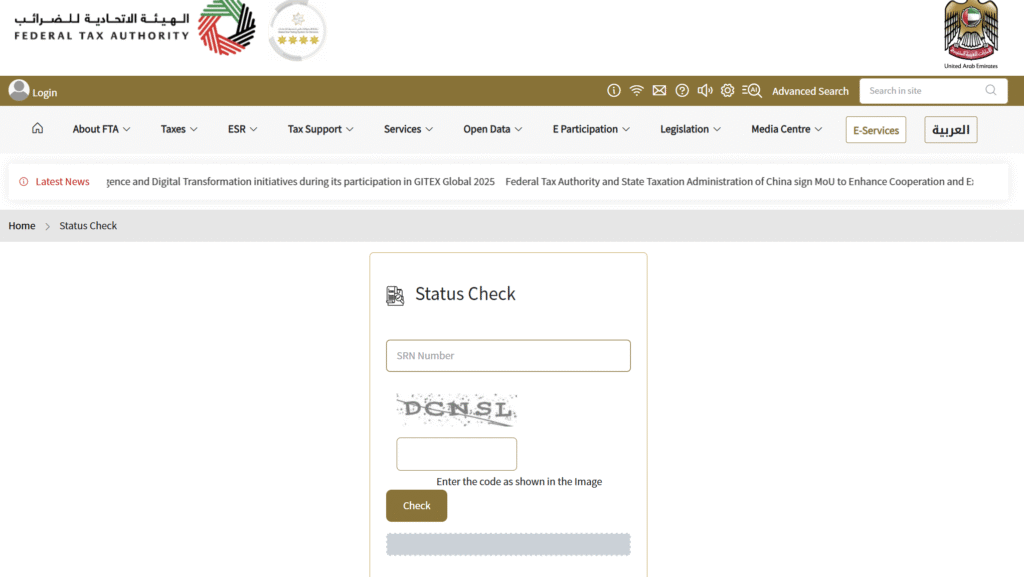
Check your SRN anytime on the official FTA portal:
➡️ https://tax.gov.ae/en/statuscheck.aspx
Steps:
- Sign in using UAE Pass
- Go to “My Requests”
- Click the relevant SRN
- Review internal notes and status updates
Understanding Different Application Statuses
Statuses include:
- Submitted – awaiting initial review
- In Progress – under verification
- Pending Documents – requires action
- Approved – successfully completed
- Rejected – needs complete re-submission
Immediate Steps to Address a Delayed SRN Application
When an SRN application is delayed, prompt and structured action is essential to prevent further setbacks. The first step is to thoroughly review the original submission to ensure all documents, license details, Emirates ID information, and trade credentials are accurate and complete. Next, businesses should communicate directly with the FTA through official support channels, including portal queries, email, or hotline, while carefully documenting every interaction for future reference. Seeking professional guidance from experienced consultants, such as Tulpar Global Taxation can help clarify specific Corporate Tax or VAT issues, correct submission errors, and expedite the resolution process, ensuring compliance is maintained without unnecessary delays.
Thorough Review of Your Original Submission
Recheck:
- License PDF readability
- Translation accuracy
- Passport + EID validity
- Board resolution authenticity
- Trade license activity alignment
Many delays stem from simple document errors.
Effective Communication with the Federal Tax Authority (FTA)
Use:
- FTA support ticket
- FTA hotline
- Clarification request within portal
Clear communication accelerates review.
Documenting All Correspondence and Follow-up Actions
Maintain proper documentation for compliance, appeals, and future audits. Businesses that keep clean records experience far fewer delays.
Seeking Clarity on Specific Queries Related to Corporate Tax or Other Obligations
Unclear business activity classification or shareholder structure often causes SRN slowdowns. Trusted consultants like Tulpar Global Taxation (Dubai, Sharjah, Ajman) and Ezat Alnajm ensure correct positioning from the start.
Strategic Solutions for Persistent SRN Delays (Beyond Cancellation)
For SRNs that remain pending despite standard follow-ups, businesses need to adopt strategic solutions beyond simple corrections or waiting. Formal escalation channels within the FTA, including supervisor reviews or departmental escalation requests, can accelerate processing when standard routes fail. Engaging professional tax consultants and legal advisors, ensures accurate documentation, timely communication, and expert navigation of regulatory complexities. Meanwhile, maintaining proactive compliance measures including up-to-date financial records, prepared Corporate Tax filings, and organized supporting documents minimizes the risk of additional delays and positions the business for seamless approval once the SRN is reviewed.
Formal Escalation Paths within the FTA
These include:
- Re-submitting clarification
- Using the escalation request option
- Contacting the FTA through registered mobile
- Requesting a supervisor review (case-by-case)
Leveraging Professional Tax Consultants and Legal Advisors
Tax advisors can:
- Identify missing compliance details
- Prepare new submissions
- Communicate professionally with FTA
- Speed up verification
Consultants like Tulpar Global Taxation often resolve cases faster due to experience with FTA systems.
Proactive Measures to Maintain Compliance during Delay Periods
During delays:
- Prepare Corporate Tax documentation
- Maintain bookkeeping accuracy
- Update license and tenancy documents
Renew expired IDs or passports
How to Cancel a Stuck SRN Application Instantly (or as Quickly as Possible)
When an SRN application becomes stuck and corrections are not feasible, cancellation is often the fastest and most effective solution. The process begins by logging into the FTA e-Services portal and accessing the “My Requests” section to select the specific SRN. From there, users can choose the “Withdraw/Cancel Application” option, provide a brief justification for the cancellation, and submit the request for processing.
For businesses seeking expedited resolution, direct communication with the FTA through support channels or assistance from experienced tax consultants, such as Tulpar Global Taxation, can ensure that the cancellation is completed promptly, allowing the entity to reapply correctly without extended delays. While cancellation temporarily pauses the registration process, it is often preferable to waiting indefinitely for a flawed or stuck SRN to clear.
When is Cancellation the Right Option?
Cancel the SRN when:
- Wrong tax type was selected
- Wrong Emirate or wrong license was used
- Documents contain critical errors
- Duplicate SRNs exist
Step-by-Step Guide to Official SRN Application Withdrawal via FTA Portal
- Log in to FTA e-Services
- Access “My Requests”
- Select the specific SRN
- Choose “Withdraw / Cancel Application”
- Provide explanation
- Submit cancellation
- Reapply with corrected documents
Expedited Withdrawal Procedures and Considerations
Urgent withdrawal can be handled through:
- FTA hotline request
- Escalation ticket
- Assistance from Ezat Alnajm or Tulpar Global Taxation
Potential Consequences of SRN Cancellation
Canceling may cause:
- Delay in TRN issuance
- Delay in corporate tax compliance start date
- Temporary access restrictions
However, it is often preferable to waiting weeks for a flawed SRN to be reviewed.
Preventing Future SRN Application Delays
Preventing future SRN delays requires a proactive and systematic approach to compliance. Businesses should ensure that all documentation, including trade licenses, Emirates IDs, shareholder information, and tenancy contracts, is accurate, up-to-date, and correctly formatted before submission. Staying informed about FTA regulations, portal updates, and Corporate Tax developments helps avoid errors caused by outdated procedures. Additionally, maintaining meticulous records of all past submissions, correspondence, and approvals allows for faster resolution of any discrepancies and reduces the likelihood of repeated delays in future SRN or TRN processes.
Best Practices for Accurate and Complete SRN Submissions
- Use clean, high-quality PDFs
- Match UAE Pass details to license details
- Ensure signatures belong to authorized persons
- Verify translation accuracy
- Review shareholder structure alignment
Staying Updated on FTA Regulations and Digital Transformation Initiatives
FTA regulations change frequently. Regularly checking updates helps ensure your SRN submissions are fully aligned with the latest rules. Staying informed also reduces the risk of delays or penalties due to non-compliance. It also allows you to adapt your processes proactively, keeping your operations smooth and efficient.
Utilizing Professional Guidance from the Outset
Consulting firms like Tulpar Global Taxation and professionals like Ezat Alnajm reduce submission errors dramatically. They bring specialized expertise that ensures compliance with complex regulations. Their guidance also saves time and resources, letting you focus on core business operations.
Maintaining Meticulous Records for All Taxation-Related Activities
Consulting firms like Tulpar Global Taxation and professionals like Ezat Alnajm reduce submission errors dramatically. They bring specialized expertise that ensures compliance with complex regulations. Their guidance also saves time and resources, letting you focus on core business operations.
Conclusion: Navigating the SRN Landscape with Confidence
2026 is a year of heightened compliance expectations in the UAE, and SRN management plays a more central role than ever before.
Reiteration of Key Strategies for SRN Delays and Cancellations
Businesses can reduce delays by:
- Preparing documents precisely
- Responding promptly to FTA requests
- Escalating efficiently
- Canceling and reapplying when necessary
The Importance of Proactive Planning for Taxation in the UAE
Early preparation ensures smoother registration, faster approvals, and fewer compliance risks. It also allows time to address potential issues before they escalate. Planning ahead improves overall efficiency and reduces last-minute stress.
Empowering Taxable Persons with Solutions for a Seamless 2026 and Beyond
With the right knowledge and partners such as Tulpar Global Taxation (Dubai, Sharjah, Ajman) and Ezat Alnajm, UAE businesses can navigate SRN submissions confidently and maintain strong compliance throughout 2026 and beyond. Their expertise ensures accurate submissions, timely updates, and minimized risks of errors or penalties. Collaborating with experienced professionals also streamlines processes, saving time and allowing businesses to focus on growth.
FAQs:
What does SRN mean in the UAE VAT context?
SRN stands for Status Request Number, a unique reference issued by the Federal Tax Authority (FTA) whenever you submit a request such as VAT registration cancellation or update. It helps you track the progress of that request online. If your SRN is delayed or stuck, it means the FTA hasn’t processed your request yet, which can affect VAT compliance or deregistration status.
Why is my SRN request delayed in 2026?
SRN delays can occur for various reasons: high volume of backlog at FTA offices, incomplete or inconsistent data submission, missing supporting documentation, or technical glitches with the FTA portal. Changes to VAT rules or increased scrutiny in 2025 can also slow down processing times.
Typically, how long should SRN approval take in the UAE?
Under normal conditions, SRN processing especially for straightforward VAT cancellations is expected to complete within 7–14 business days. However, delays can extend that period to several weeks if there are issues with the submission.
What are the most common mistakes that cause SRN delays?
Common pitfalls include:
- Entering incorrect or mismatched business information (e.g. trade license details, company name).
- Uploading incomplete or unreadable supporting documents.
- Failing to settle pending VAT liabilities before cancellation.
- Submitting during peak periods (e.g., fiscal year-end), which overloads the FTA system.
Can I cancel or withdraw a “stuck” SRN request instantly?
It’s not always possible to reverse a request instantly once submitted, the request enters the FTA queue. However, if the request is still “Pending” and not yet escalated, you may contact FTA support or your tax consultant to request withdrawal or re‑submission with corrected data, which often speeds up processing.
What are the DIY steps to salvage a stuck SRN application?
- Log in to the FTA portal and check SRN status.
- Review your submission ensure all fields and attachments are complete and accurate.
- If errors are found, prepare a corrected submission.
- Contact FTA support (through portal/message center) quoting your SRN and ask whether a withdrawal or amendment is possible.
- Resubmit once cleared, or wait for FTA confirmation to proceed with cancellation.
How can a tax consultant help expedite SRN cancellation?
A professional firm like Tulpar Global Taxation brings expertise: they pre‑check your documentation for completeness, ensure regulatory compliance, communicate with the FTA on your behalf, and follow up persistently. This significantly reduces human error and improves the chances of faster SRN approval or cancellation. Their experience also helps anticipate issues avoiding delays before they occur.
Will a delayed SRN impact my VAT compliance or trigger penalties?
Yes, if your SRN is delayed, your business remains technically VAT‑registered, which means you must continue filing VAT returns and meet VAT compliance obligations. If you fail to do so, this could lead to penalties. Timely SRN resolution is important to avoid unintended compliance breaches.
What can I do to avoid SRN delays in the future? To minimize risk:
- Double‑check all inputs before submission (company name, license number, registration info).
- Ensure all supporting documents are clear and properly formatted.
- Settle any outstanding VAT dues or input/output tax adjustments in advance.
- Avoid submitting during known peak periods (e.g. month-end or fiscal-year end).
- If unsure, use a trusted tax consultancy to help you submit flawlessly the first time.
When is the right time to seek professional help for SRN issues?
If your SRN remains “Pending” for more than 2–3 weeks, or if you receive repeated rejection notices from FTA, it’s wise to engage a qualified tax consultant. Professional support can reduce stress, avoid compliance risks, and increase your chances of instant or faster resolution.
