
How Real Estate Tokenization Is Reshaping Ownership in UAE
Table of Contents

Let's Talk
Sign Up For Free Consultation
The UAE is rapidly redefining global property ownership models through real estate tokenization. With the integration of blockchain technology, progressive regulation, and a dynamic real estate market, Dubai real estate is setting a benchmark for digital transformation in asset ownership.
As we move into 2025 and 2026, real estate tokenization in Dubai is not just an emerging trend, it is shaping the future of real estate and unlocking new investment opportunities for both institutional and retail investors.
What Is Real Estate Tokenization?
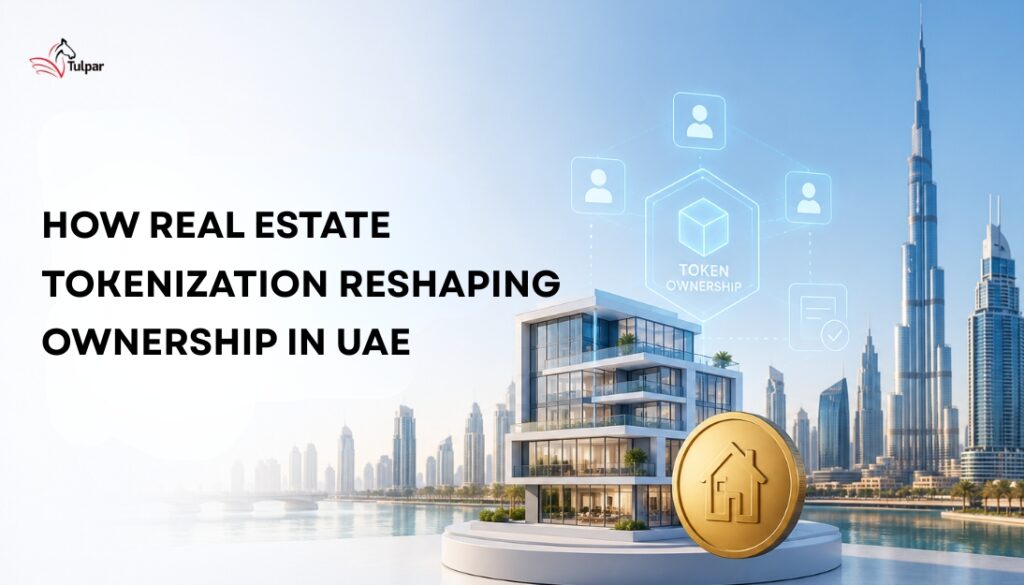
Real estate tokenization is the process of converting a real estate asset into digital tokens recorded on blockchain, where each token represents a fraction of ownership in a single property or across multiple properties.
Real estate tokenization is the digital representation of property ownership through blockchain-based tokens, enabling fractional ownership, enhanced liquidity, and easier access to real estate investment.
Unlike traditional real estate transactions, ownership in tokenised real estate is:
- Stored on a blockchain
- Registered on the blockchain
- Represented through digital tokens recorded on blockchain
This transformation allows investors to access real estate in the UAE without the traditional capital barriers.
Real Estate Tokenization in Dubai: Market Evolution
Real estate tokenization in Dubai is gaining traction due to strong regulatory support and a forward-thinking ecosystem.
Key authorities such as the Dubai Land Department (DLD) and the Virtual Assets Regulatory Authority (VARA) are actively shaping policies around virtual assets and tokenised real estate.
Key Growth Drivers
- Strategic initiatives led by Dubai Future Foundation
- Regulatory clarity from Dubai Virtual Assets Regulatory Authority (VARA)
- Increasing adoption of crypto and blockchain in the real estate sector
- Government-backed estate tokenisation project in its pilot phase
Dubai’s leadership is positioning the emirate as a global hub for tokenization of real estate and real-world assets.
How Tokenization Enables Fractional Ownership
One of the most powerful aspects of real estate tokenisation is enabling fractional ownership. Instead of purchasing an entire property in Dubai, investors can own a fraction of ownership through real estate tokens.
Key Advantages for Investors
- Access to premium Dubai property with lower capital
- Diversification across multiple properties instead of a single property
- Opportunity to earn monthly rental income
- Exposure to capital appreciation in Dubai’s real estate market
This model allows investors to build a portfolio with fractional investments, significantly increasing real estate exposure.
Tokenized Real Estate vs Traditional Real Estate
Feature | Traditional Real Estate | Tokenized Real Estate |
Ownership | Full ownership | Fraction of ownership |
Liquidity | Low | High |
Accessibility | High capital required | Accessible via tokens |
Transparency | Limited | Recorded on the blockchain |
Transactions | Manual | Digital |
The transition from traditional real estate to tokenised real estate is transforming how property investment works in the UAE.
Regulatory Framework Governing Tokenised Real Estate

The UAE has built a strong regulatory foundation to support real estate tokenization.
Key Authorities
- Dubai Land Department (DLD)
- Virtual Assets Regulatory Authority (VARA)
Regulatory Considerations
- Ownership linked to tokenised title backed by title deeds
- Compliance with standard DLD fee
- Oversight of virtual asset transactions
- Legal clarity for digital tokens and real estate products
These frameworks ensure secure participation for UAE residents and UAE ID holders using their Emirates ID.
Investment Opportunities in Tokenized Real Estate
The rise of tokenized real estate is unlocking new investment opportunities in Dubai world-class property market.
Why Investors Are Shifting
- Access to real estate in Dubai with lower entry barriers
- Consistent rental income and monthly rental income streams
- Flexible lock-in period compared to traditional investments
- Exposure to high-growth property market
This aligns with the evolving future of property investment, where accessibility and liquidity are key.
Role of Blockchain in Real Estate Tokenisation
At the core of real estate tokenisation is blockchain technology, enabling transparency and efficiency.
Key Blockchain Features
- Ownership recorded on the blockchain
- Assets stored on a blockchain
- Secure, immutable records
- Reduced fraud risk
Every digital tokens recorded on blockchain ensures trust in managing real estate assets.
The Future of Real Estate Tokenization (2025–2026 Outlook)
As we approach 2025 and 2026, the future of real estate tokenization in the UAE looks highly promising.
Emerging Trends
- Expansion of tokenised real estate across residential and commercial sectors
- Increased participation from real estate developers
- Integration with global virtual asset ecosystems
- Growth of estate tokenisation project beyond the pilot phase
Dubai continues to lead innovation in Dubai’s real estate, shaping the future of real estate tokenization globally.
Key Benefits of Real Estate Tokenization

Strategic Advantages
- Increased liquidity in the real estate market
- Democratized property ownership
- Global access for investors
- Efficient and transparent transactions
These key benefits are accelerating adoption across the real estate sector.
Taxation, Compliance, and Advisory in UAE
As tokenization of real estate evolves, taxation and regulatory compliance become critical.
Professional advisory firms like Tulpar Global Taxation with offices in Dubai, Sharjah, and Ajman are actively providing consultancy and assistance for real estate tokenization, helping investors and businesses navigate:
- Tax implications of tokenized real estate
- Structuring real estate investment portfolios
- Compliance with UAE tax and regulatory frameworks
- Cross-border virtual asset transactions
Expert guidance from professionals such as Ezat Alnajm, an FTA certified tax agent and certified transfer pricing expert in Dubai, UAE, ensures accurate compliance and strategic planning.
Conclusion: A New Era of Property Ownership
Real estate tokenization is fundamentally transforming property ownership in the UAE. By combining blockchain, regulatory innovation, and a strong Dubai real estate ecosystem, the region is unlocking new possibilities for investors.
As real estate in the UAE continues to evolve, tokenised real estate will play a central role in shaping the future of real estate, offering accessible, transparent, and scalable investment opportunities.
FAQs:
Real estate tokenization is the process of converting property ownership rights into digital tokens on a blockchain. In Dubai, this allows a single property to be divided into fractions, enabling multiple investors to own a piece of high-value real estate. Each token represents a digital share of the asset, providing a secure and transparent way to invest in the UAE’s property sector.
Yes. The UAE has established a robust legal framework led by the Dubai Land Department (DLD) and the Virtual Assets Regulatory Authority (VARA). These entities ensure that tokenized assets are backed by physical title deeds and that all digital transactions comply with UAE law. For investors concerned about legal structures, consulting with an FTA certified tax agent like Ezat Alnajm can provide clarity on how these regulations impact your portfolio.
Investors earn returns in two primary ways:
- Monthly Rental Income: You receive a proportionate share of the rent generated by the property.
- Capital Appreciation: If the property value increases in the Dubai market, the value of your digital tokens rises accordingly.
Absolutely. The system is designed for seamless integration. UAE residents and UAE ID holders can use their Emirates ID to complete KYC (Know Your Customer) processes on licensed tokenization platforms, making the transition from traditional to digital investment straightforward.
While the UAE is known for its investor-friendly tax environment, tokenized assets may trigger specific compliance requirements, especially regarding Corporate Tax or VAT for businesses. Tulpar Global Taxation, a leading advisory firm in Dubai, Sharjah, and Ajman, specializes in helping investors navigate the tax complexities of real estate tokenization to ensure full compliance with the Federal Tax Authority (FTA).
Traditional real estate is illiquid, meaning it takes months to sell a property. Tokenized real estate offers high liquidity because tokens can be traded on secondary digital exchanges. This allows investors to exit their positions and liquidate their assets much faster than a conventional property sale.
Blockchain acts as a digital ledger that records every transaction. It ensures that ownership records are immutable, transparent, and secure. By storing assets on a blockchain, the risk of fraud is significantly reduced, and the need for expensive intermediaries is minimized.
No, and that is the primary benefit of the fractional ownership model. Real estate tokenization removes high entry barriers, allowing retail investors to enter the Dubai world-class property market with significantly lower capital than what is required for a full property purchase.
The intersection of virtual assets and real estate is a specialized field. Working with experts like Ezat Alnajm, a Certified Transfer Pricing Expert in Dubai, ensures that your investment structure is optimized for both local and international tax laws. Tulpar Global Taxation provides the strategic planning necessary to manage cross-border virtual asset transactions and portfolio structuring.
The outlook is highly bullish. As we move into 2026, we expect to see the expansion of tokenization from residential units to large-scale commercial sectors. With the Dubai Future Foundation and government-backed pilot projects gaining momentum, Dubai is set to become the global capital for real-world asset (RWA) tokenization.
