

Table of Contents
Related Articles

A Complete Setup Guide to Company Formation in IFZA
August 31, 2026

Ezat Alnajm Strengthens UAE Crypto Compliance with CCAS
August 27, 2026

Let's Talk
Sign Up For Free Consultation
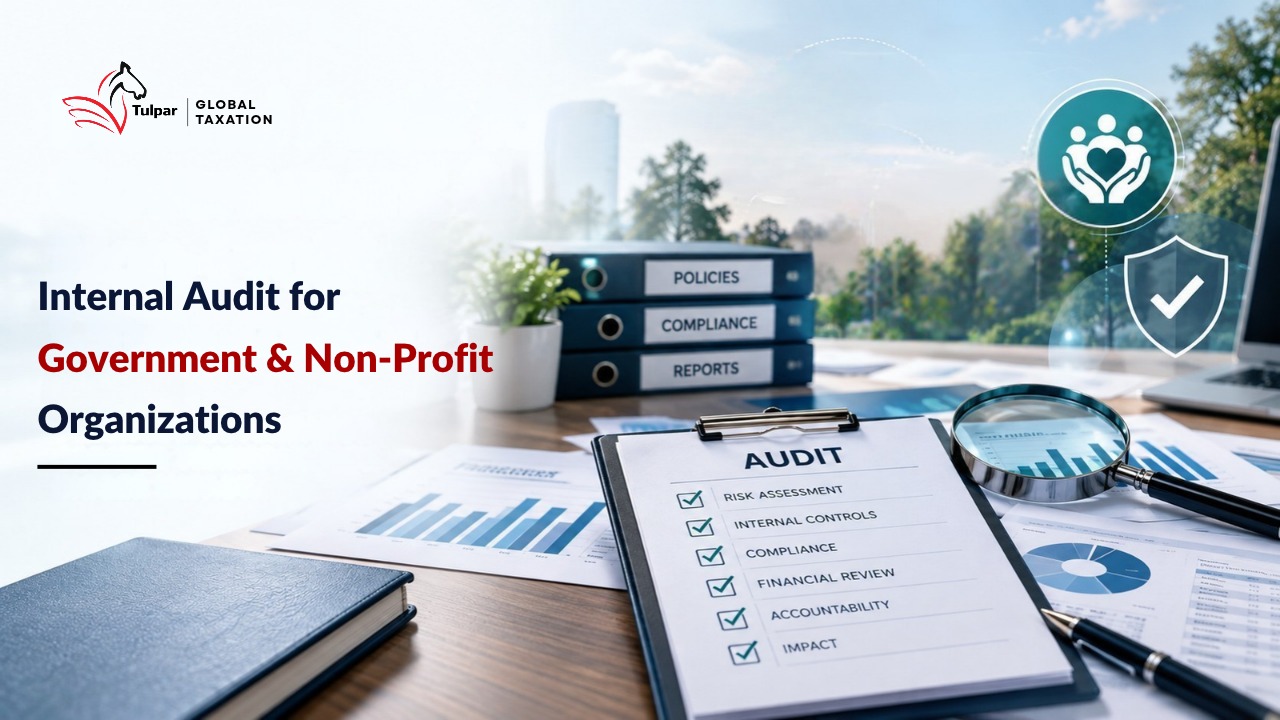
Have you wondered what happens when nobody watches the money? When public funds, donations, or grants are not properly managed, financial errors, resource mismanagement, and compliance issues may remain unobserved thereby negatively impacting the transparency and accountability of an organization. To prevent these types of problems from occurring in public sector organizations and non-profit organizations, internal audits are performed. An internal auditor in UAE examines an organization’s financial records, operational activities, risk management processes and internal controls to assess if an organization operates effectively and manages its resources in a responsible manner.
The internal auditing process can help government and non-profit organizations in the UAE achieve greater transparency and accountability, as well as make better decisions. This guide will give you the internal auditing process, why it is performed, how many different areas it covers, and why you should consider hiring professional auditors.
Understanding Internal Audit Dubai
An Internal Audit in Dubai is a formal review of an organization’s records, processes, systems, and controls. The purpose of this type of review is for management to determine if their employees have followed the proper procedures for completing their work tasks and if the organizations available resources are being utilized efficiently.
An example of how an internal audit would be beneficial to a non-profit organization (charities/NGOS) is when they receive donations for a community development project. The internal audit will verify if all donations have been recorded accurately, if the approvals of expenses have been done properly and if the money was spent on the right things.
An audit of a federal agency can also look at its procurement contracts, what it has paid its suppliers, how much of its budget it used, and if the agency was following all of its internal financial procedures.
An internal audit, unlike an audit that examines only financial statements, will examine how an organization operates. The internal audit will identify weak areas within the operation, recommend ways to improve those areas, and assist management in strengthening accountability.
The Role of Internal Audit in Public Organizations
The importance of internal audit for government and non-profit organizations can be seen in the following areas:
No. | Internal Audit Objective | Importance for Government Organizations | Importance for Non-Profit Organizations |
1 | Proper Control | Ensures public funds are used for their intended purposes and not wasted or misused. | Ensures donations are used for their intended purposes and not wasted or misused. |
2 | Accounting System | Ensures government spending follows laws and budgets. | Ensures donations are recorded and classified correctly. |
3 | Help to Management | Helps management make good decisions and take care of public money properly. | Helps management make good decisions and take care of donor money properly. |
4 | Working Review | Checks whether government programs achieve their goals and deliver services effectively. | Checks whether non-profit projects achieve their goals and deliver services effectively. |
5 | Asset Protection | Protects public buildings and assets from loss, misuse, or being sold without permission. | Protects donated equipment and assets from loss, misuse, or being sold without permission. |
6 | Internal Check | Reduces the risk of fraud, mistakes, and unauthorized transactions involving public funds. | Reduces the risk of fraud, mistakes, and unauthorized transactions involving donations. |
7 | Fair Statements and Error Scrutiny | Helps produce accurate budget reports and clear financial information for the public. | Helps produce accurate donor reports and clear financial information for donors. |
8 | Detection of Fraud | Helps protect public money and keeps public confidence. | Helps protect donor money and keeps donor trust. |
9 | Determination of Liability | Holds employees accountable for managing public resources. | Holds employees accountable for managing donor funds. |
10 | Help in Independent Audit | Helps with audits by auditors-general and regulators. | Helps with audits by donors and regulators. |
11 | Performance Appraisal | Shows whether government programs meet their goals and give value for money. | Shows whether non-profit projects meet their goals and give value for money. |
12 | Providing Suggestions | Helps improve public services and financial management. | Helps improve services and financial management. |
13 | New Ideas | Encourages better use of public resources and new ways to deliver public services. | Encourages better fundraising and new ways to deliver charity services. |
14 | Use of Resources | Make sure limited public funds give maximum benefit to citizens. | Make sure limited donations give maximum benefit to beneficiaries. |
15 | Accounting Policies | Helps follow accounting standards and government financial rules. | Helps follow accounting standards and donor requirements. |
Note: Internal audit gives independent, risk-based assurance and advice. It does not guarantee that all fraud and errors will be prevented or found. Management is still responsible for putting effective internal controls in place and fixing problems.
The Internal Audit Process
An organized internal audit provides a clear picture of how your business operates. It will allow you to prioritize those aspects of your business that pose the greatest risk, collect reliable data, and identify and correct deficiencies in your operation before they become expensive problems.
Planning and Risk Assessment
All audits begin by conducting an in-depth review of the way that your organization operates on a day-to-day basis, what types of work are done, who does those tasks, and what are the main threats to your business.
During this stage of the process, the auditor will review the organization’s financial procedures, its annual budget, its procurement policies, its funding structures, and its historical audit reports. By developing a risk-based approach to planning for the audit, the organization can ensure that its resources are directed toward those areas which could potentially have the greatest impact on its ability to manage its finances effectively, avoid mismanagement of its funds, and/or maintain controls over its operations.
Reviewing Documents and Records
After that, there will be a thorough examination of all the paper work. In the UAE, an internal auditor reviews the financial statements, agreements/contracts, invoices, proof of payments, bank statements, payroll documents, grant agreements, and donor records against actual supporting documents.
The objective of this exercise is to confirm that each and every transaction has been correctly documented, completely approved, adequately justified and follows your organization’s internal controls.
Testing Internal Controls
Internal controls are the security measures that exist within your daily business activities to help stop errors and prevent fraud. Examples include having multiple people review and approve payments; setting clear spending limits; controlling who has access to your systems; reconciling your bank accounts on a consistent basis; and splitting up the responsibility of managing money among various employees.
The auditor then tests each of these systems so they can see if:
(1) the rules are logically consistent
(2) whether or not your staff is adhering to those rules in their daily duties.
Reporting Findings
After completing the testing process, the auditor produces a clear and factual report. The report identifies any deficiencies in operation that were identified during the review process, explains the risk involved with each deficiency, and provides realistic and practical methods for correcting each deficiency.
Follow-Up and Continuous Improvement
An audit is only as effective as the actions taken after an audit. Management should clearly identify each responsible person and establish specific time frames for implementing each suggested correction.
Conducting follow-up reviews at a future date will ensure that your organization has implemented the recommended changes and will verify that the strength of your organization’s entire internal controls program has increased as a result of these changes.
Key Areas Covered in Internal Audits
Internal audits for government and non-profit organizations may cover several areas, depending on their size, activities, funding sources, and risk exposure.
Common areas include:
- Financial management and budget control.
- Donations, grants, and restricted funds.
- Procurement and supplier payments.
- Payroll and employee expenses.
- Project expenditure and resource allocation.
- Regulatory and contractual compliance.
- Information systems and financial data security.
- Asset management and inventory records.
Reviewing these areas helps organizations understand where procedures are effective and where improvements are needed.
Audit Deadlines and Penalties
Non-Profit Organizations in the UAE
Under Federal Decree-Law No. 50 of 2023, public welfare associations in the UAE are required to prepare annual financial accounts approved by an approved audit office. Article 39 requires the Board of Directors to submit both the previous year’s audited accounts and the following year’s draft budget to the Ministry and the Local Authority within 15 days of the General Assembly’s approval.
In Dubai, Article 40(7) of Law No. 12 of 2017 requires civil society organizations covered by the law to submit their annual balance sheet and final accounts , approved by an audit firm recognized by the CDA , along with supporting documents and a detailed audit report to the Community Development Authority (CDA) within four months of the financial year-end.
Failure to meet applicable regulatory requirements may result in warnings, financial penalties, suspension of activities, or licence revocation, depending on the violation.
Get Professional Internal Audit Support UAE
Tulpar Global Taxation is available for organizations looking for assistance with internal auditing services. We’ll be working closely with you as an organization to determine what type of internal audits you require. To accomplish this, we will first define how far the audit should go (i.e., its scope), then collect all the relevant documents that may be useful during the audit, identify potential risks, and finally establish reporting standards for the audit.
An organization that requires support in reviewing its financial controls, improving its accounting practices, or getting ready for an external audit may find that working with professionals to create a more organized and accountable financial system will provide them with the support they need.
For assistance, contact Tulpar Global Taxation:
Email: info@tulpartax.com
Phone: +971 54 444 5124
Get in touch with us to go over what your company needs for both internal auditing and complying with financial regulations in the United Arab Emirates.
FAQs:
What is an internal audit for a non-profit organization?
An internal audit is a review of the entire operation of an organization, which includes but isn’t limited to the financial statement, donation, grant, expenditure, internal control and operational processes. An internal audit assists in confirming that the organization records and uses funds appropriately in accordance with the organization’s goals and relevant rules/requirements.
Why is internal audit important for government organizations?
The process allows government agencies to monitor the way they spend public money, examine the procurement process, recognize areas where there are weak controls, control risk, and maximize the efficiency of the public resource.
How often should an organization conduct an internal audit?
Auditing is done at different frequencies depending upon many different factors such as how large the organization is, how complicated are the organization’s processes, the degree of risk involved with those processes, whether there are federal laws that apply to the organization, and how much money is available for auditing. When organizations are at higher risk in their operations, they may need a more frequent audit schedule. A risk based audit plan can help establish a starting point for determining what areas of the organization should be audited first.
What Are the Common Internal Audit Challenges Faced by NGOs?
NGOs have to account for the donations they receive and show where the money goes. NGOs also need to keep track of donations, reduce the risk of fraud, and make sure funds are spent properly . Internal audits can uncover these problems and help NGOs avoid similar issues in the future.
Can Tulpar Global Taxation assist with internal audit requirements in the UAE?
Tulpar Global Taxation can discuss your organization’s audit, accounting, and compliance needs and help determine the appropriate scope of professional support. The exact services available should be confirmed with the team.
