
Types of Cryptocurrency - Bitcoin, Altcoins, Stablecoins, Meme Coins, and Crypto Tokens
The modern digital asset ecosystem is strictly categorized into five primary types of cryptocurrency: foundational decentralized currencies (Bitcoin), programmable smart-contract networks (Altcoins), reserve-backed digital dollars (Stablecoins), community-driven speculative vehicles (Meme Coins), and functional decentralized ecosystem drivers (Crypto Tokens). For businesses and corporate treasuries navigating the UAE’s progressive Virtual Assets Regulatory Authority (VARA) and Central Bank frameworks, structurally distinguishing between these cryptocurrency types is an operational and compliance necessity.
Table of Contents

Let's Talk
Sign Up For Free Consultation
The global digital asset landscape has transitioned from an experimental cryptographic subculture into a highly sophisticated, institutional-grade financial ecosystem. For corporate leaders, family offices, and business owners in the United Arab Emirates (UAE), navigating this space requires a rigorous, structural understanding of how these digital currencies operate, their economic functions, and the regulatory frameworks governing them.
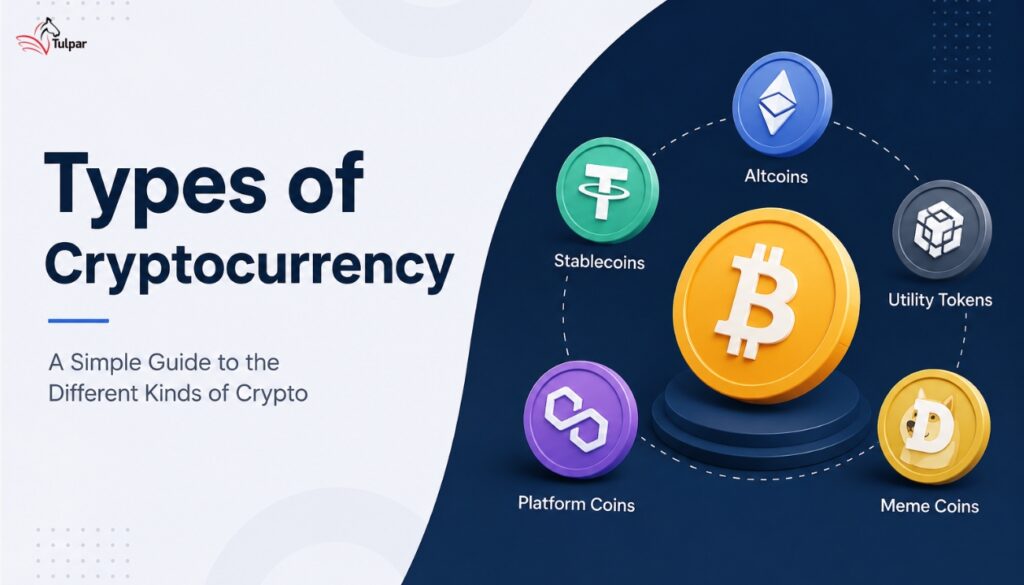
The UAE led by the federal Capital Market Authority (CMA) and Dubai’s Virtual Assets Regulatory Authority (VARA) has established one of the world’s most progressive yet stringent compliance environments for virtual currency and tokenized assets. As commercial enterprises increasingly integrate digital ledger technologies into their treasury management and international billing operations, identifying the distinct types of cryptocurrency becomes an operational necessity.
To maintain fiscal optimization and ensure cross-border regulatory alignment, entities must evaluate these digital assets through a lens of risk management, economic utility, and sovereign compliance.
What Is Bitcoin and Why Does It Matter?
Bitcoin (BTC) is the first cryptocurrency built on a decentralized blockchain network, engineered to facilitate peer-to-peer transactions without financial intermediaries or central clearinghouses. Introduced in 2009 by the pseudonymous entity Satoshi Nakamoto, it introduced a reliable mechanism for true virtual currency scarcity within a digital ecosystem.
The Architecture of the Bitcoin Network
The foundational structural layer of Bitcoin is the Bitcoin blockchain, an immutable, distributed ledger maintained by a globally distributed network of nodes. To achieve consensus regarding the validity of transactions without a trusted third party, the network employs a proof of work (PoW) consensus mechanism. Under this system, specialized participants engage in Bitcoin mining, dedicating immense computational power to solve complex cryptographic puzzles.
The miner who successfully solves the puzzle secures the right to append the next block of transactions to the ledger and is rewarded with newly minted BTC. This structural mechanism serves a dual purpose: it secures the blockchain technology against malicious actors and regulates the issuance of new digital currency.
Store of Value vs. BTC Price Volatility
Bitcoin’s underlying monetary policy is hardcoded into its protocol, enforcing an absolute supply cap of 21 million coins. This algorithmic scarcity has led global institutional asset managers to categorize Bitcoin as a store of value, frequently labeling it digital gold. Despite its validation as an institutional asset class, BTC price volatility remains a primary concern for corporate treasury managers.
While it serves as an excellent hedge against inflationary fiat monetary policy, its short-to-medium-term price fluctuations require sophisticated risk mitigation strategies. For UAE enterprises considering allocating corporate cash reserves to Bitcoin, analyzing these fluctuations alongside a certified professional is essential to maintaining stable balance sheets.
Characteristic | Bitcoin (Digital Gold) | Physical Gold |
Supply Limit | Fixed at 21 Million BTC | Finite (Estimated via mining) |
Portability | High (Digital/Cryptographic) | Low (Heavy, Physical Logistical Burden) |
Divisibility | Up to 8 Decimal Places (Satoshis) | Requires melting/refining |
What Are Altcoins? Types, Uses, and Risks
Altcoins encompass any digital asset built to offer alternative features, enhanced transaction speeds, or distinct governance architectures outside of the original Bitcoin framework. As the broader crypto ecosystem expanded, developers recognized that while Bitcoin succeeded as a decentralized currency, its scripting language was intentionally limited to optimize security. This gave rise to these alternative cryptocurrencies, or altcoins.
Smart Contract Platforms and Layer 1 Blockchains
The most significant evolution in the altcoin market came with the advent of Ethereum, a Layer 1 blockchain that introduced programmable smart contracts. Smart contracts are self-executing agreements with the terms directly written into code lines, enabling the development of complex decentralized applications (dApps) and the birth of decentralized finance (DeFi). To address the blockchain scalability bottlenecks that often cause high transaction fees on Ethereum, alternative high-throughput Layer 1 protocols and advanced Layer 2 solutions have emerged:
- Solana: Utilizes a unique Proof of History (PoH) consensus to process tens of thousands of transactions per second at a fraction of a cent.
- Cardano & Avalanche: Feature modular, multi-chain architectures designed for secure enterprise deployments and global financial dApps.
- XRP & Litecoin: Engineered specifically for high-speed, cost-effective cross-border digital payments and settlement liquidity.
- Polkadot: Focuses on cross-chain interoperability, connecting independent blockchains into a single unified network.
- Binance Coin (BNB): Powers the ecosystem of the world’s largest crypto exchange, facilitating gas fees, asset launches, and decentralized trading.
Risks Inherent to Alternative Cryptocurrencies
While altcoins drive profound blockchain innovation, they introduce heightened operational and investment risks. Many alternative protocols suffer from lower liquidity, elevated code vulnerability within their smart contracts, and extreme susceptibility to cryptocurrency volatility. Diversifying a crypto portfolio across altcoins requires meticulous due diligence, technical code audits, and an understanding of the underlying asset’s economic runway.
Stablecoins Explained: Benefits, Risks, and Regulations
Stablecoins are digital currencies designed to maintain a fixed valuation relative to a specific reference asset, typically a sovereign fiat currency such as the US Dollar, to eliminate the friction caused by market volatility. To resolve the friction caused by the volatility of traditional cryptocurrency categories, the market engineered these stable instruments.
Structural Mechanics: Fiat, Crypto, and Algorithmic Frameworks
Stablecoins rely on distinct structural architectures to achieve price stability:
- Fiat-Backed Stablecoins: Assets like USDT (Tether) and USDC (USD Coin) act as a digital dollar. They are backed 1:1 by traditional fiat currency and short-term cash equivalents held in heavily audited financial reserves. These fiat-backed stablecoins provide the primary liquidity corridors across the global cryptocurrency market.
- Crypto-Backed Stablecoins: Regulated via over-collateralized smart contracts, assets such as DAI maintain parity by locking up alternative digital assets as collateral.
- Algorithmic Stablecoins: These systems attempt to maintain stability through supply-and-demand algorithms. However, these assets present extreme structural vulnerabilities and have historically faced catastrophic de-pegging risks.
The UAE Regulatory Stance on Reserve-Backed Tokens
From a commercial perspective, stablecoins serve as the backbone for efficient B2B transaction settlements, international vendor payments, and operational treasury positioning. However, compliance is paramount. Under the updated federal compliance mandates issued by the Central Bank of the UAE (CBUAE), the issuance and promotion of algorithmic stablecoins are strictly prohibited. Only fully licensed, fiat-backed stablecoins that meet rigid reserve-backed tokens criteria are permitted for domestic payment services.
Furthermore, corporate entities utilizing stablecoins for cross-border transactions must recognize that using digital assets as payment methods triggers specific corporate reporting requirements. Consulting an expert like Ezat Alnajm, a federal tax authority (FTA) certified tax agent and certified transfer pricing expert based in Dubai, UAE, ensures that corporate stablecoin transactions comply perfectly with local corporate tax frameworks.
What Are Meme Coins and Should You Invest?
Meme coins are community-driven cryptocurrencies born from internet culture, viral social media trends, and humor, typically lacking underlying enterprise utility or proprietary technology. Unlike Layer 1 platforms or asset-backed instruments, these function primarily as highly volatile, speculative vehicles.
The Mechanics of Viral Cryptocurrencies
Assets like Dogecoin, Shiba Inu, and Pepe Coin function indicators as speculative crypto assets. They generally lack an underlying enterprise business model, proprietary technology, or systemic cash flow. Instead, their valuation is driven almost exclusively by social media influence, celebrity endorsements, and community psychology, creating a cyclical dynamic of rapid retail inflows followed by sudden liquidations.
Corporate Risk Management and Market Cycles
From a professional corporate asset allocation standpoint, meme coins represent an exceptionally high-risk environment. They are highly susceptible to drastic corrections during a shifting bear market, and their liquidity can evaporate instantaneously. While individual speculators trade these viral cryptocurrencies for short-term gains during an aggressive bull market, corporate treasury portfolios should prioritize capital preservation and strictly avoid exposing commercial capital to assets devoid of structural token utility.
Privacy Coins Explained: Monero, Zcash, and AML Concerns
Privacy coins are a specialized subset of digital assets engineered to provide absolute crypto anonymity and financial privacy by concealing transaction details on the distributed ledger. While standard public blockchains like Bitcoin are pseudonymous, these assets take advanced steps to mask sender and receiver data entirely.
Technical Anonymity vs. Public Ledgers
Standard public blockchains like Bitcoin are pseudonymous; while user identities are hidden behind cryptographic addresses, every transaction amount, sending address, and receiving wallet is permanently recorded and visible. Privacy coins such as Monero (XMR) and Zcash (ZEC) utilize advanced cryptographic protocols including ring signatures, stealth addresses, and zero-knowledge succinct non-interactive arguments of knowledge (zk-SNARKs) to execute anonymous transactions and confidential transactions. This ensures absolute transaction obfuscation and protects user identities from public blockchain privacy analytics tools.
Anti-Money Laundering (AML) and Global Regulatory Scrutiny
Because of their capacity to hide illicit capital flows, privacy-focused blockchains face intense regulatory scrutiny globally. In the UAE, both the federal Capital Market Authority (CMA) and Dubai’s VARA have enacted strict prohibitions against the issuance, trading, and facilitation of privacy coins.
Operating or transacting with these prohibited assets carries severe anti-money laundering (AML concerns) penalties, which can include massive corporate fines and the revocation of operational commercial licenses. For international firms operating out of the UAE, maintaining strict adherence to Know Your Customer (KYC) and Counter-Terrorism Financing (CFT) guidelines is non-negotiable.
Utility Tokens vs Security Tokens: Key Differences
The core distinction lies in their primary function: utility tokens grant users access to an ecosystem or platform service, whereas security tokens represent fractional ownership of an underlying real-world asset. Understanding these boundaries is critical for any corporation seeking to issue digital assets or participate in compliant token offerings.
Utility Tokens and the Decentralized Economy
A utility token provides users with specific platform access or rights within a distinct digital ecosystem. These tokens are designed to power decentralized applications (dApps), settle fees for blockchain services, distribute staking rewards, or act as a governance token allowing holders to vote on internal protocol parameters. They do not represent an ownership stake in the underlying enterprise; rather, they are the fuel for Web3 applications and digital ecosystems.
Security Tokens: Regulated Digital Financial Instruments
Conversely, security tokens represent fractional ownership of a real-world financial asset. These tokenized assets or digital securities are backed by tangible equity, debt, real estate, or revenue streams. Because they grant traditional investor rights and function as sophisticated financial instruments, they fall squarely under the jurisdiction of federal securities laws and require comprehensive registration. The UAE stands out globally as one of the few jurisdictions that has legally isolated real-world asset (RWA) tokenization from standard volatile crypto tokens, creating an exceptionally clear path for institutional debt and equity tokens issuance.
Dimension | Utility Tokens | Security Tokens |
Primary Purpose | Platform Utility, Access, & Gas Fees | Investment Return, Equity, & Profit Sharing |
Underlying Value | Ecosystem Demand & Technical Adoption | Real-World Asset Backing (Property, Debt, Equity) |
Regulatory Status | Exempt from standard securities laws (Subject to VASP rules) | Stringent Securities Regulation & Mandatory Compliance |
Maximizing ROI: Strategic Portfolio Allocation and Risk Management

An institutional digital asset framework centers on meticulous risk management, clear asset diversification, and adherence to evolving local corporate tax mandates. For commercial institutions, entering the cryptocurrency market requires a risk-adjusted approach focused on long-term corporate sustainability rather than unhedged speculation.
Crypto Diversification and Risk Mitigation
A resilient digital asset strategy centers on professional crypto diversification. Institutional treasuries typically anchor their digital balance sheets in foundational Layer 1 assets like Bitcoin and Ethereum due to their superior market capitalization and deep liquidity pools. They then supplement these holdings with fully compliant, regulated crypto assets like fiat-backed stablecoins to facilitate continuous daily operational liquidity. Effective risk management dictates that volatile or speculative assets should never jeopardize primary operational capital.
UAE Tax Compliance and Corporate Tax Guidelines
The introduction of the 9% Federal Corporate Tax on business net profits exceeding AED 375,000 has shifted the landscape for virtual asset accounting in the UAE. While passive personal investments remain tax-free for individuals, any systematic commercial crypto activity including proprietary trading, corporate staking revenue, digital payment processing, and commercial mining is fully integrated into an enterprise’s taxable income base.
To maintain compliance and protect your business from costly penalties, partnering with a premier advisory firm like Tulpar Global Taxation is essential. Proper corporate structuring under the guidance of Ezat Alnajm ensures that your digital asset transactions, cross-border transfers, and transfer pricing strategies remain aligned with the latest Federal Tax Authority mandates.
Corporate Next Steps and Strategic Advisory
As the tokenization of real-world assets accelerates across the UAE’s financial centers, the line between traditional corporate finance and digital assets will continue to blur. For modern businesses, staying ahead of this curve requires moving past speculative hype and embracing a sophisticated approach to asset classification, operational security, and fiscal compliance.
Developing a resilient corporate framework for digital currency requires expert guidance. Connect with Tulpar Global Taxation today to align your digital asset strategy with robust, compliant corporate tax and regulatory frameworks.
FAQs:
The five primary types of cryptocurrency are Bitcoin, Altcoins, Stablecoins, Meme Coins and Crypto Tokens. While all share an underlying basis in blockchain technology, they serve vastly different economic functions. For enterprise entities managing a diversified portfolio in the UAE, categorizing these assets correctly is crucial for technical implementation, regulatory alignment with Dubai’s Virtual Assets Regulatory Authority (VARA), and precise accounting execution.
A utility token provides functional platform access or network usage rights within a specific decentralized application (dApp), whereas a security token represents fractional ownership of a regulated, real-world financial asset. Utility tokens function as the operational currency or gas fee layer for Web3 applications and governance mechanisms.
Conversely, security tokens function as digital financial instruments backed by tangible equities, real estate, or debt models. Under federal guidelines, issuing or managing security tokens requires strict legal compliance and adherence to securities regulations.
Yes, corporate stablecoin transactions are fully subject to the 9% UAE Federal Corporate Tax if they are executed as part of an active, income-generating business activity that crosses the statutory threshold.
While individual passive crypto investments or personal wallet holdings remain tax-free, any system where an enterprise uses fiat-backed tokens (like USDT or USDC) for international vendor billing, trading profits, or commercial payroll integrates directly into the company’s taxable net income. To map these transactions correctly and stay compliant with the Federal Tax Authority (FTA), corporations rely on specialized firms like Tulpar Global Taxation.
The primary regulatory risk of privacy coins is their absolute legal prohibition across major financial jurisdictions due to severe Anti-Money Laundering (AML) and Counter-Terrorism Financing (CFT) compliance failures. Because protocols like Monero (XMR) and Zcash (ZEC) utilize transaction obfuscation to hide the identities of senders and receivers, they face immense sovereign scrutiny.
In UAE, VARA and the Capital Market Authority have placed a complete federal ban on the issuance, trading, and facilitation of any anonymity-enhancing virtual currencies.
Commercial cryptocurrency mining is classified as an active business operation in the UAE, making its coin rewards fully subject to corporate tax rules while remaining outside the scope of standard Value Added Tax (VAT). Unlike hobby-level setup structures, enterprise-grade mining farms must record the fair market value of all minted tokens as standard operational revenue at the exact time of receipt.
To legally optimize your fiscal footprint, offset operational expenditures (like specialized hardware depreciation and immense energy bills), and file correctly, businesses consult with Ezat Alnajm, an FTA certified tax agent and certified transfer pricing expert based in Dubai.
Bitcoin is categorized as a digital store of value due to its algorithmically fixed maximum supply of 21 million coins and its proof-of-work security model, earning it the industry title of “digital gold.”
Unlike utility tokens or smart-contract altcoins that power scalable decentralized ecosystems, Bitcoin’s primary institutional thesis relies on structural scarcity and network immutability. This fixed monetary policy allows corporate asset managers to utilize BTC as a long-term hedge against fiat inflation, despite short-term market price volatility.
The Central Bank of the UAE (CBUAE) mandates that only fully licensed, fiat-backed stablecoins linked directly to sovereign currencies are permissible for payment functions, while algorithmic stablecoins are strictly prohibited.
To maintain maximum consumer safety and price stability within the domestic economy, issuers must secure clear reserve-backed token status, keeping cash reserves in heavily audited banking institutions. Any business setting up digital payment rails using stablecoins must audit their workflows to ensure they interact purely with approved, regulated crypto assets.
Yes, cross-border cryptocurrency transfers between related corporate entities or international permanent establishments immediately trigger strict UAE transfer pricing compliance documentation.
Under federal tax rules, virtual asset transfers, corporate token distributions, or intercompany stablecoin financing must be executed at verifiable “arm’s length” prices. Enterprise groups must retain detailed transaction logs, wallet hashes, and valuation reports to defend their calculations. Corporate treasuries partner with Ezat Alnajm, a premier certified transfer pricing expert in Dubai, to build compliant localized documentation structures.
Under current UAE corporate tax rules, a registered business can deduct realized corporate crypto trading losses from their gross virtual asset revenues to lower their total taxable income base. However, personal or un-incorporated hobbyist investment losses hold no tax offset value under the law.
For corporations, these calculations require highly structured accounting books that record the acquisition costs and fair market value fluctuations of each distinct cryptocurrency category. Navigating these offsets requires the guidance of corporate tax professionals like Tulpar Global Taxation.
